 HoldMyTwist
Episode 7
Four Lanterns for Number Eleven
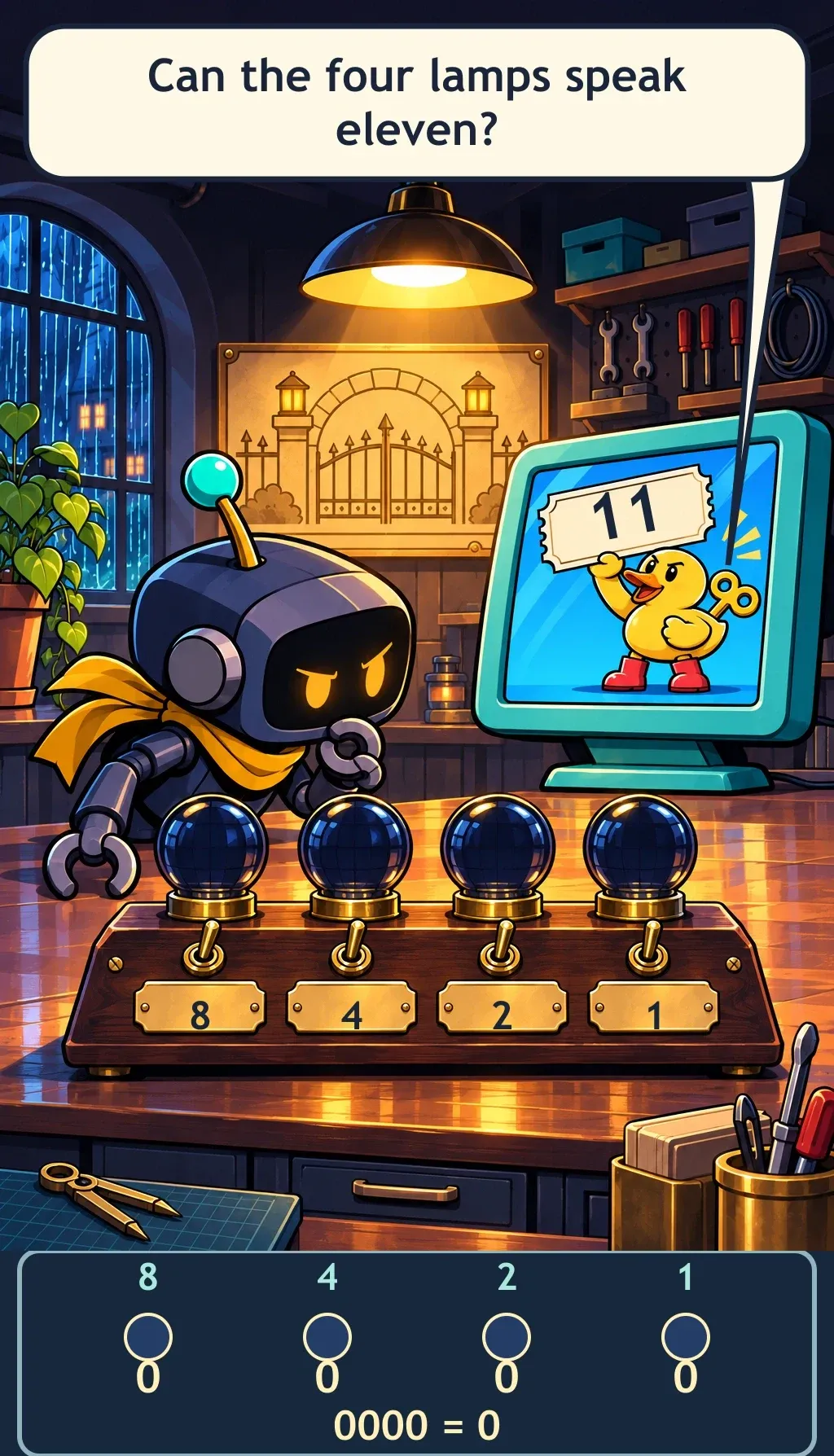
The parade gate is calling number eleven. There are four little signal lanterns on Robot's desk.
Episode transcript
Eleven for the parade gate
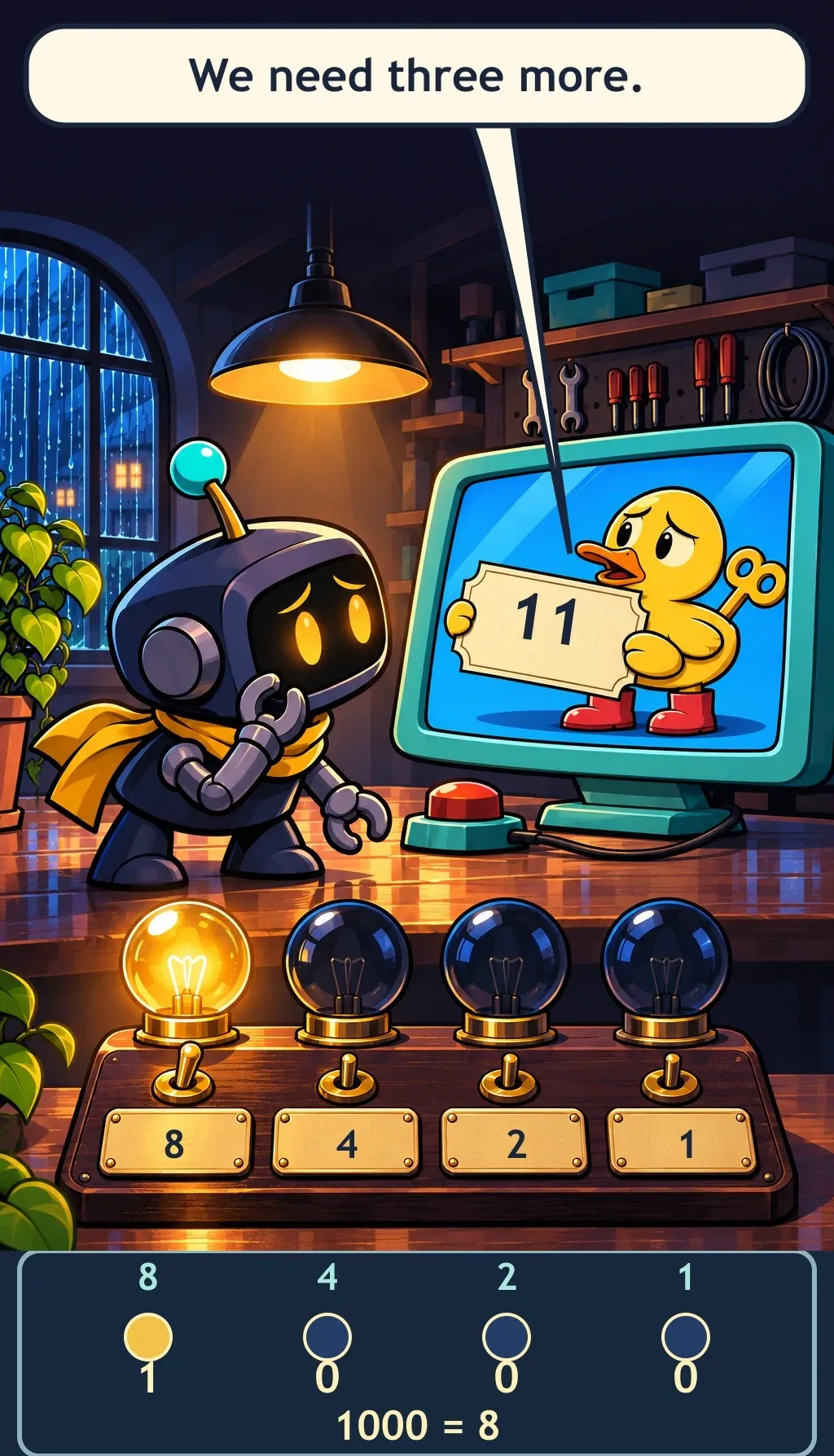
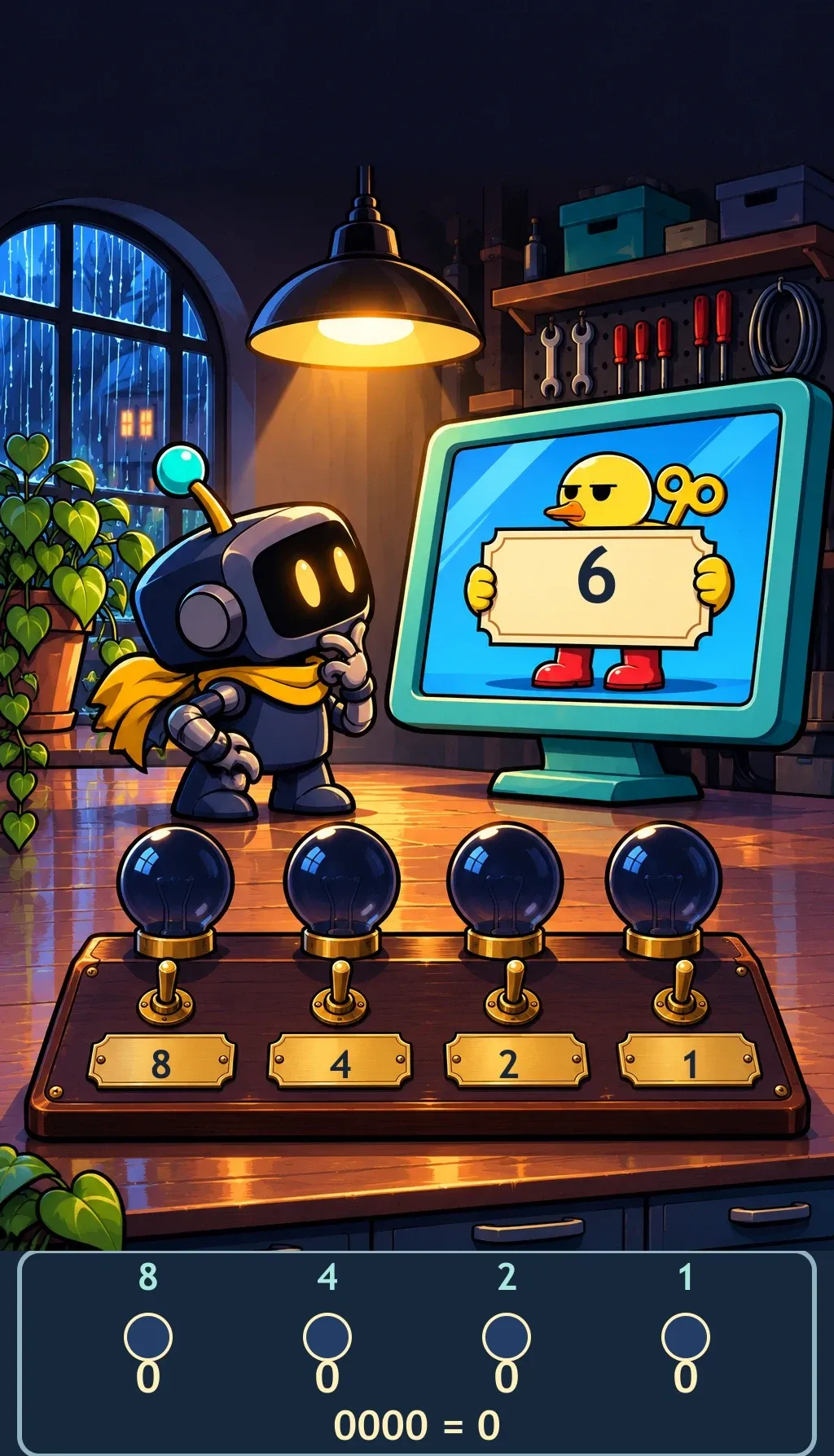
The parade gate is calling number eleven. There are four little signal lanterns on Robot's desk. Duck is holding ticket 11 in the monitor.
Duck: Can the four lamps speak eleven?
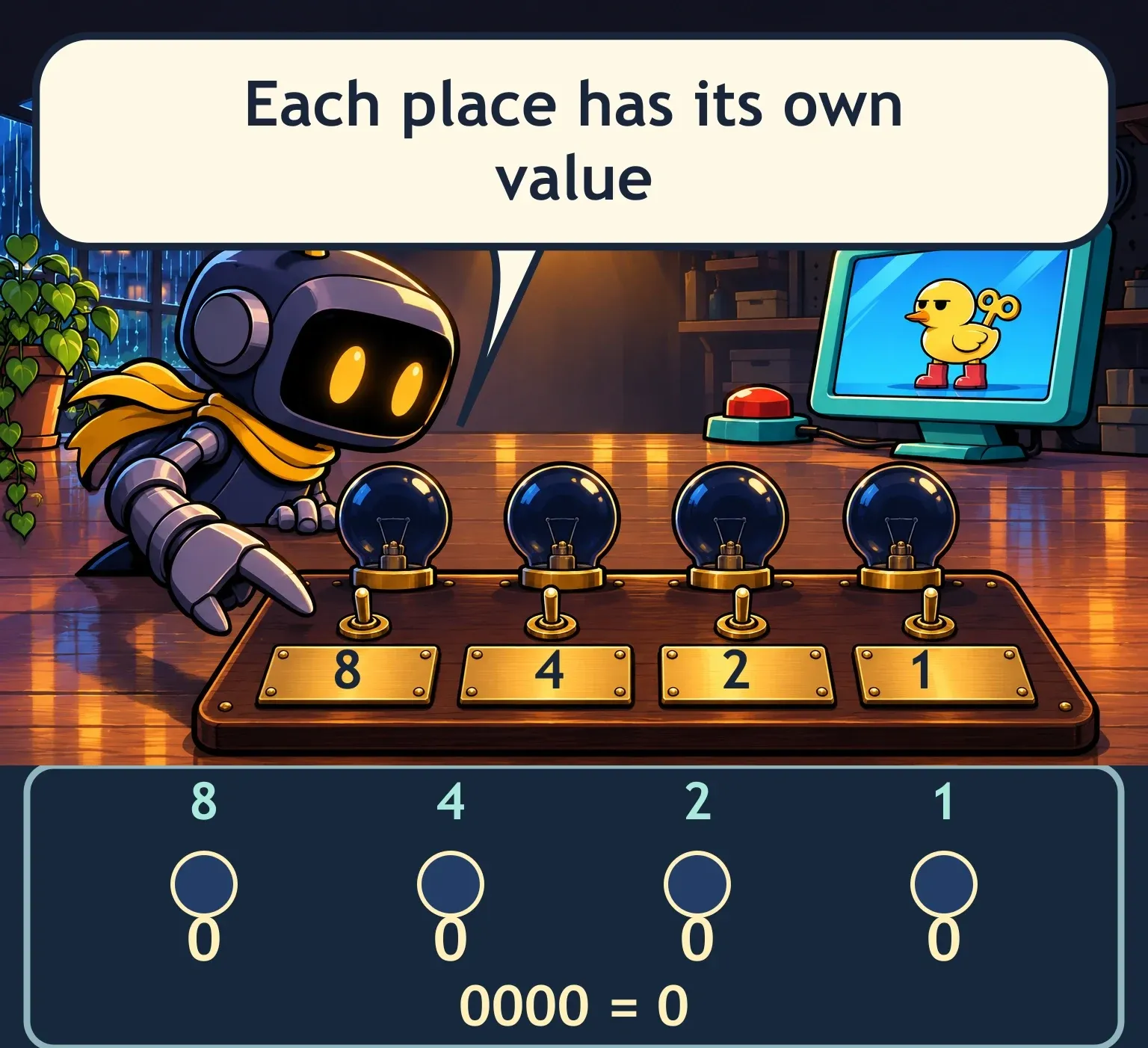
The static labels from left to right are 8, 4, 2, 1.
LEFT → RIGHT: 8, 4, 2, 1. ON = 1. OFF = 0.
Robot: Each place has its own value
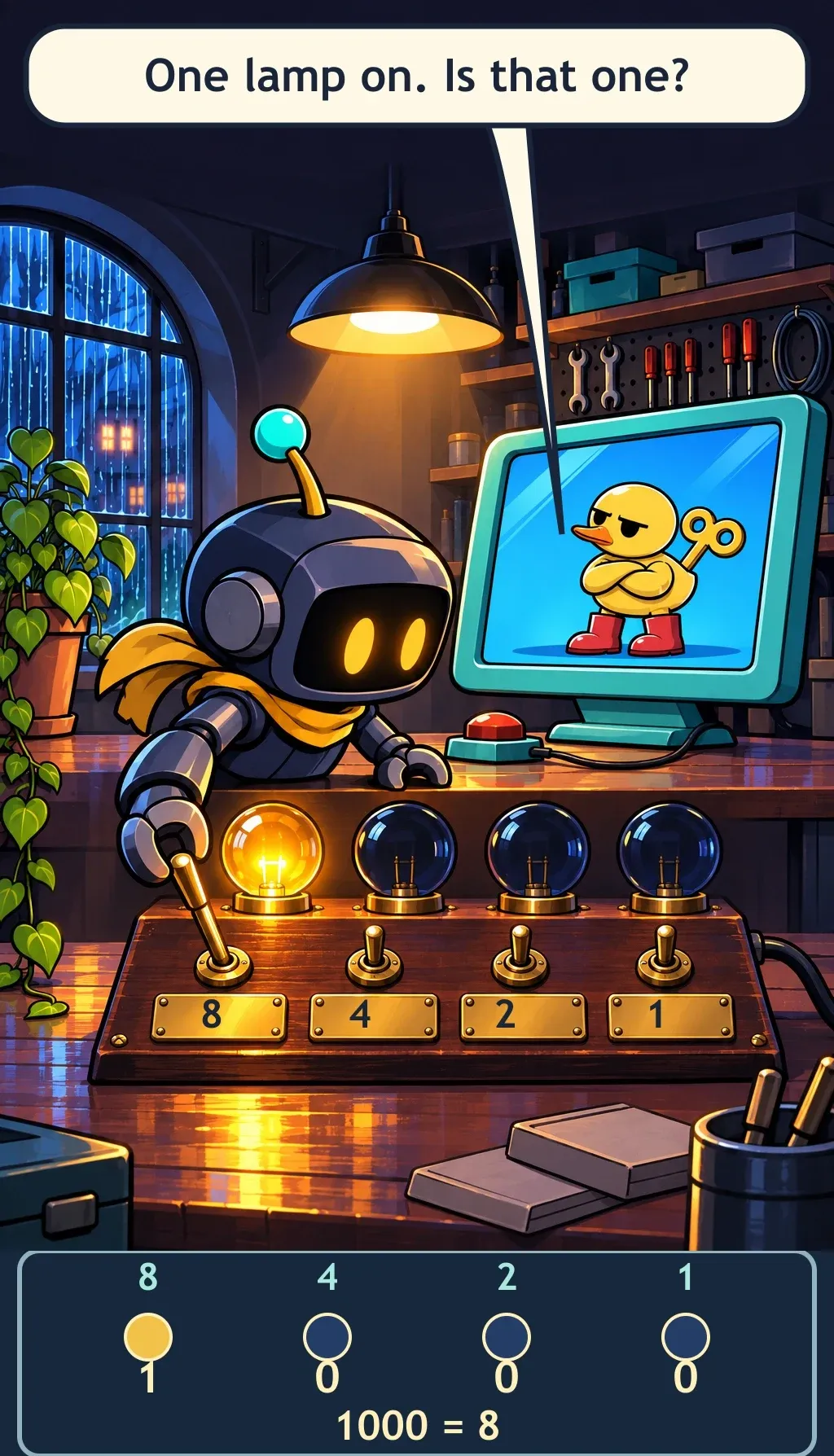
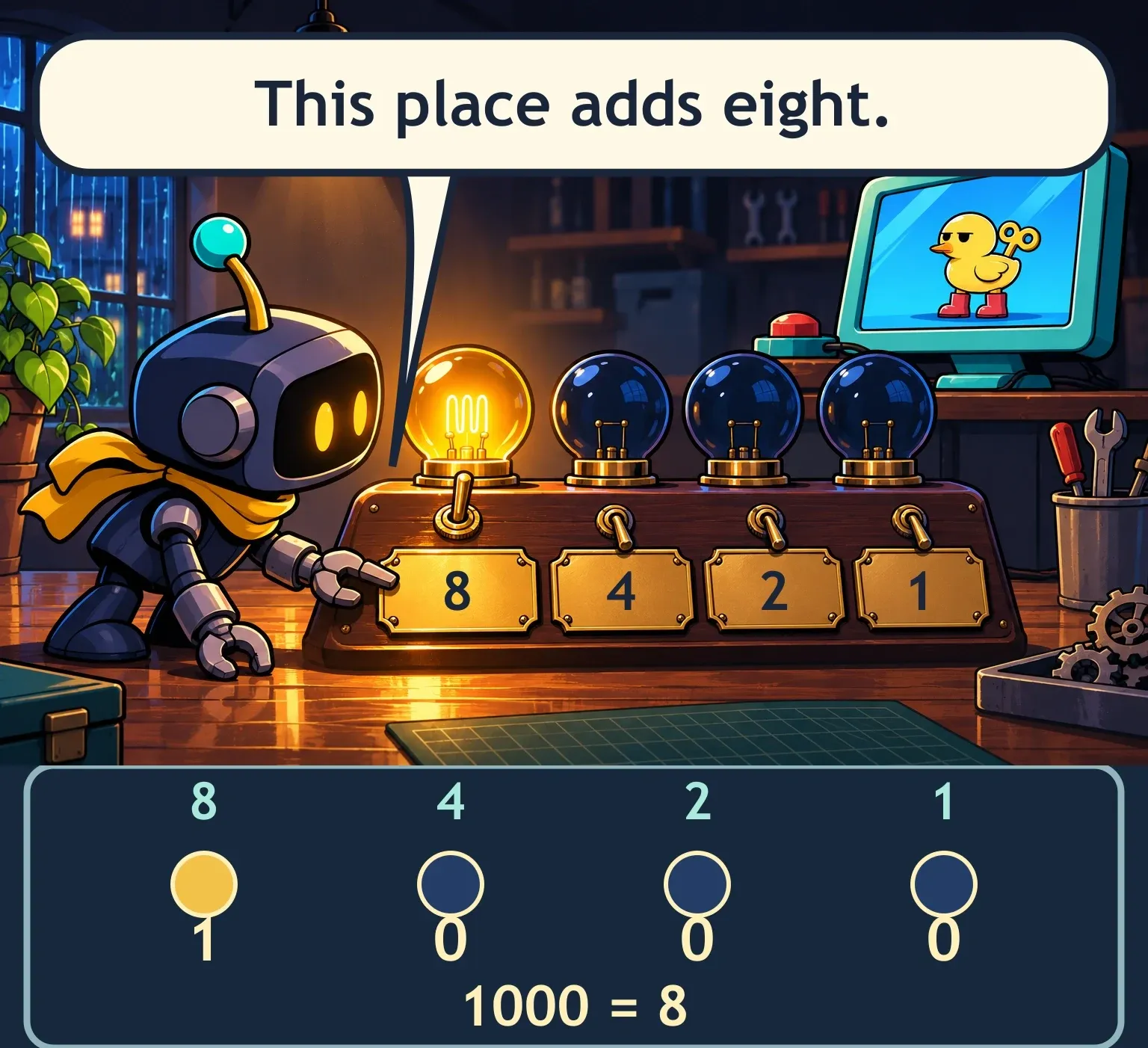
1000 → 8
Duck: One lamp on. Is that one?
The total is 8 on the display.
8 + 0 + 0 + 0 = 8
Robot: This place adds eight.
Choose the weighted places
Duck: We need three more.
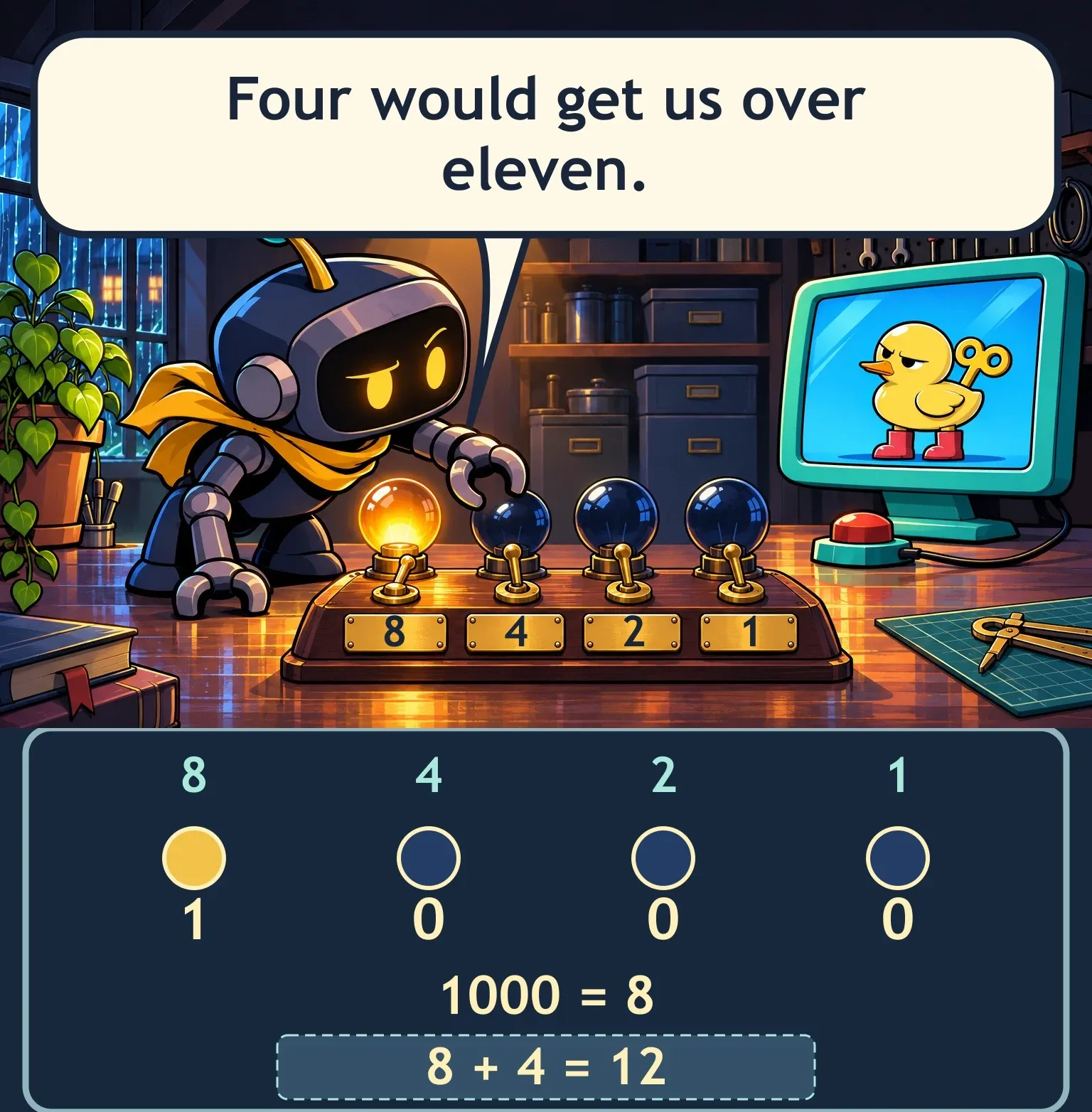
Separate trial sum shows 8+4=12.
TRIAL: 8 + 4 = 12 > 11. KEEP 4 OFF
Robot: Four would get us over eleven.
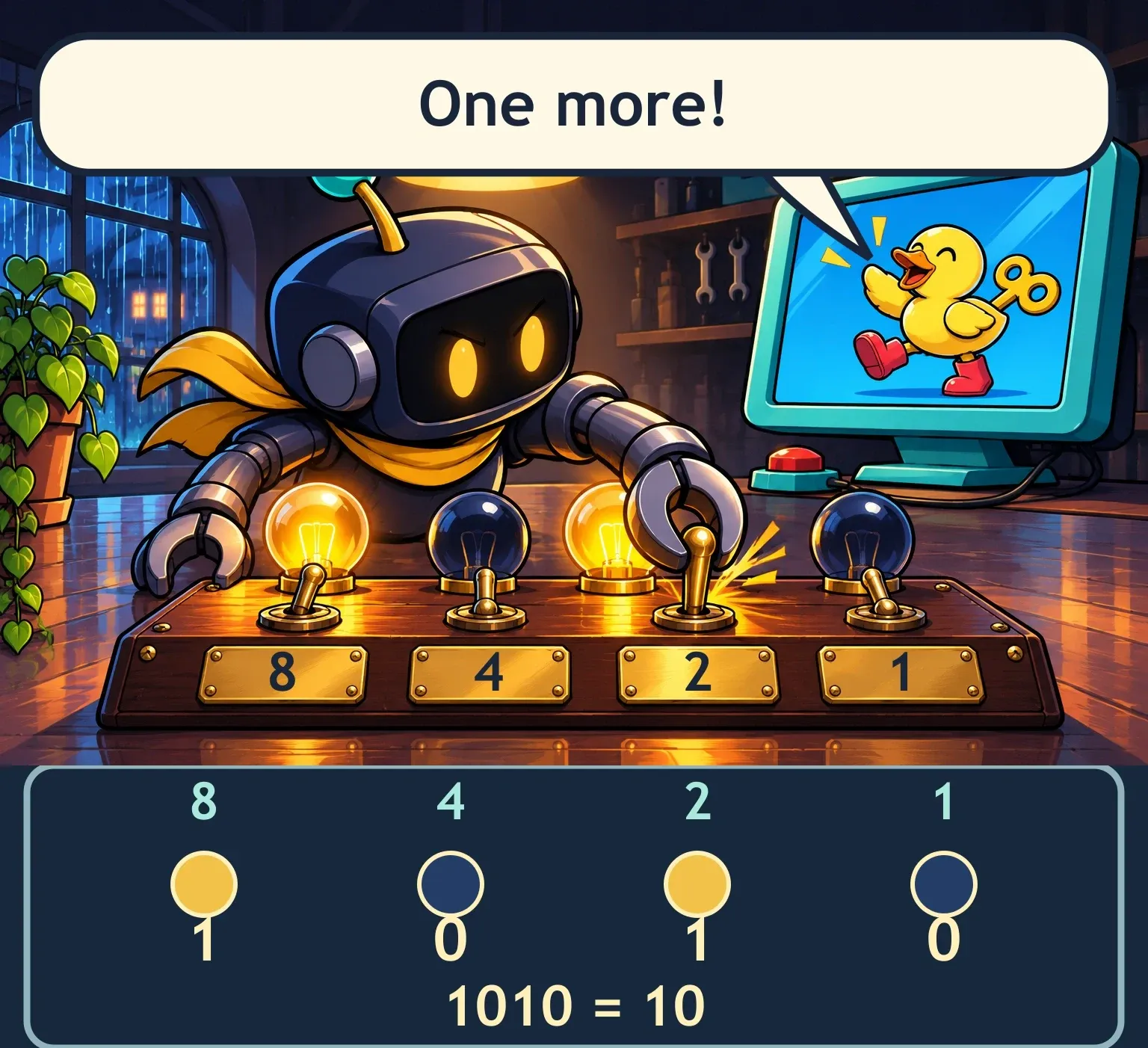
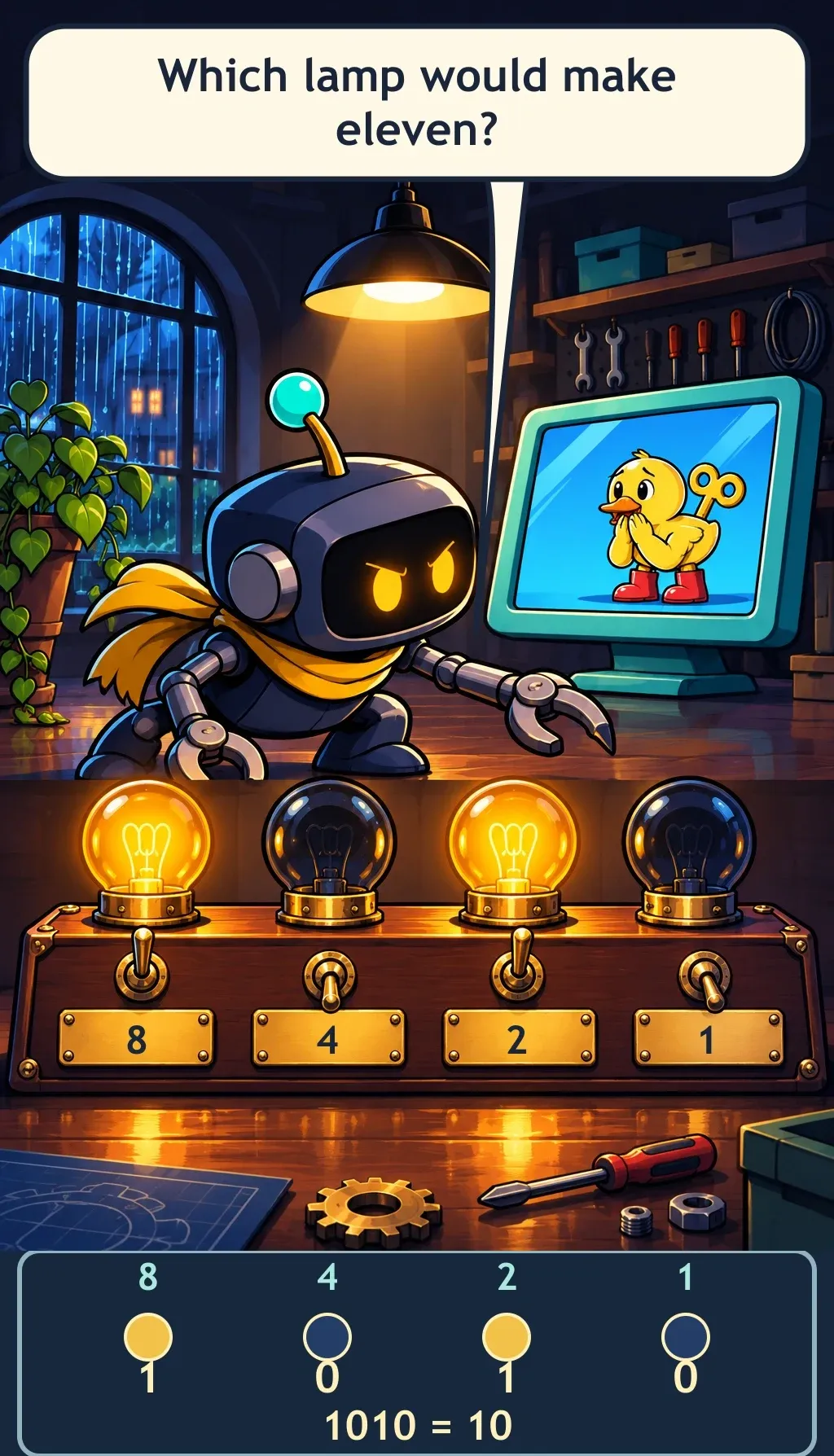
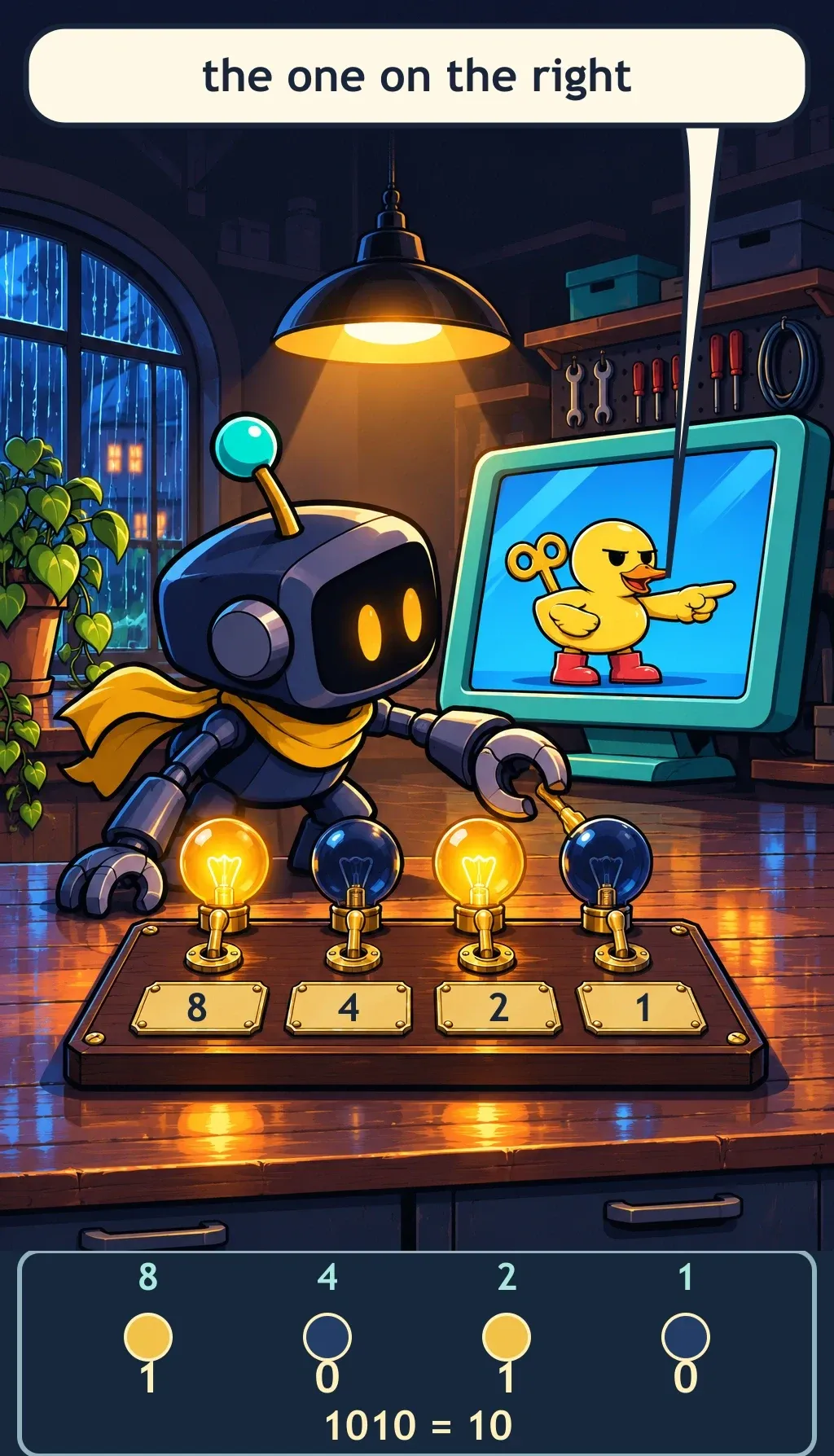
1010 → 8 + 2 = 10
Duck: One more!
8 AND 2 ON. 4 AND 1 OFF. TARGET 11
The gate opens
Duck points at the farthest to the right 1 lamp, but does not turn it on.
Duck: the one on the right
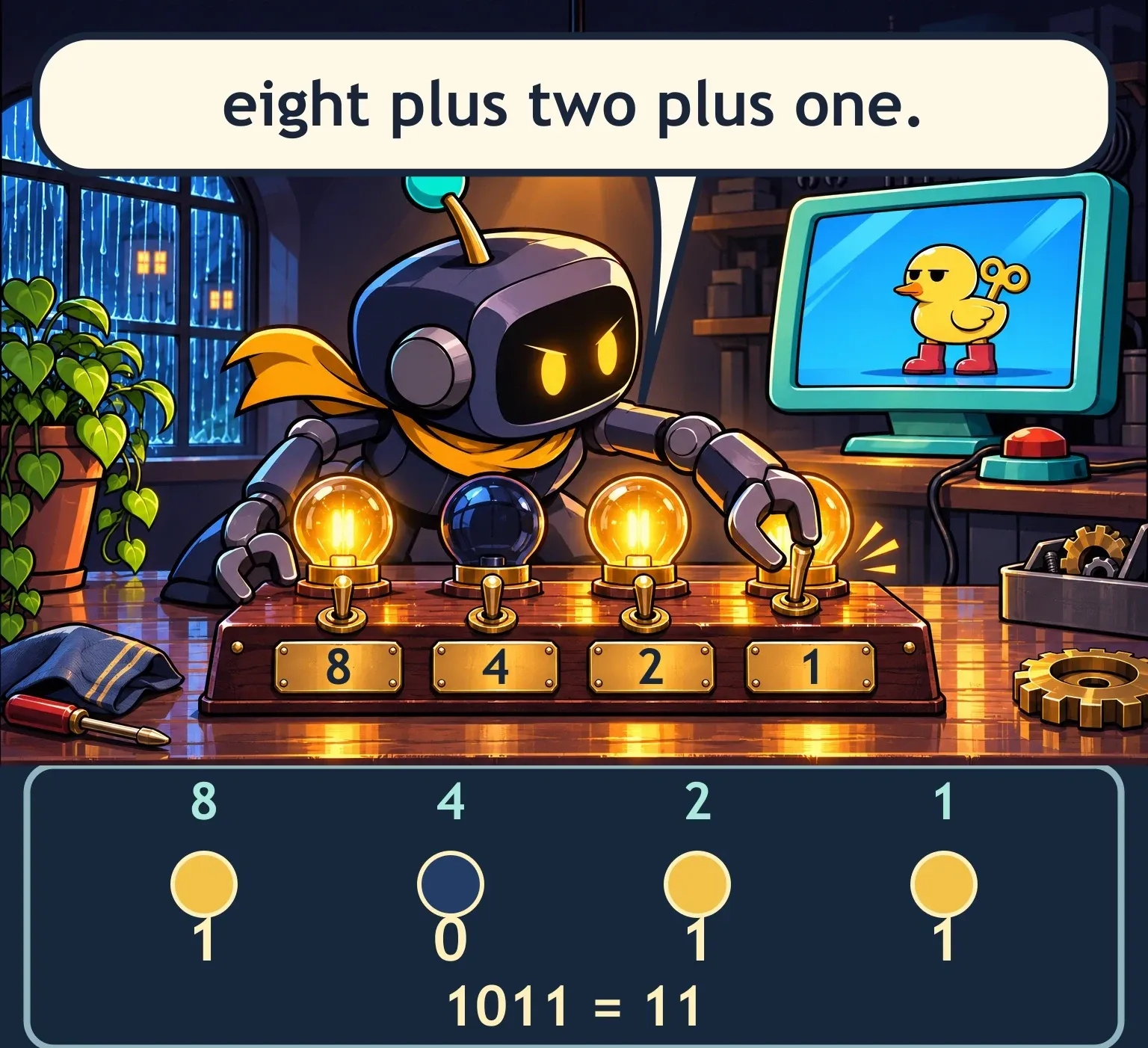
Robot turns on the 1 lamp.
1011 → 8 + 2 + 1 = 11
Robot: eight plus two plus one.
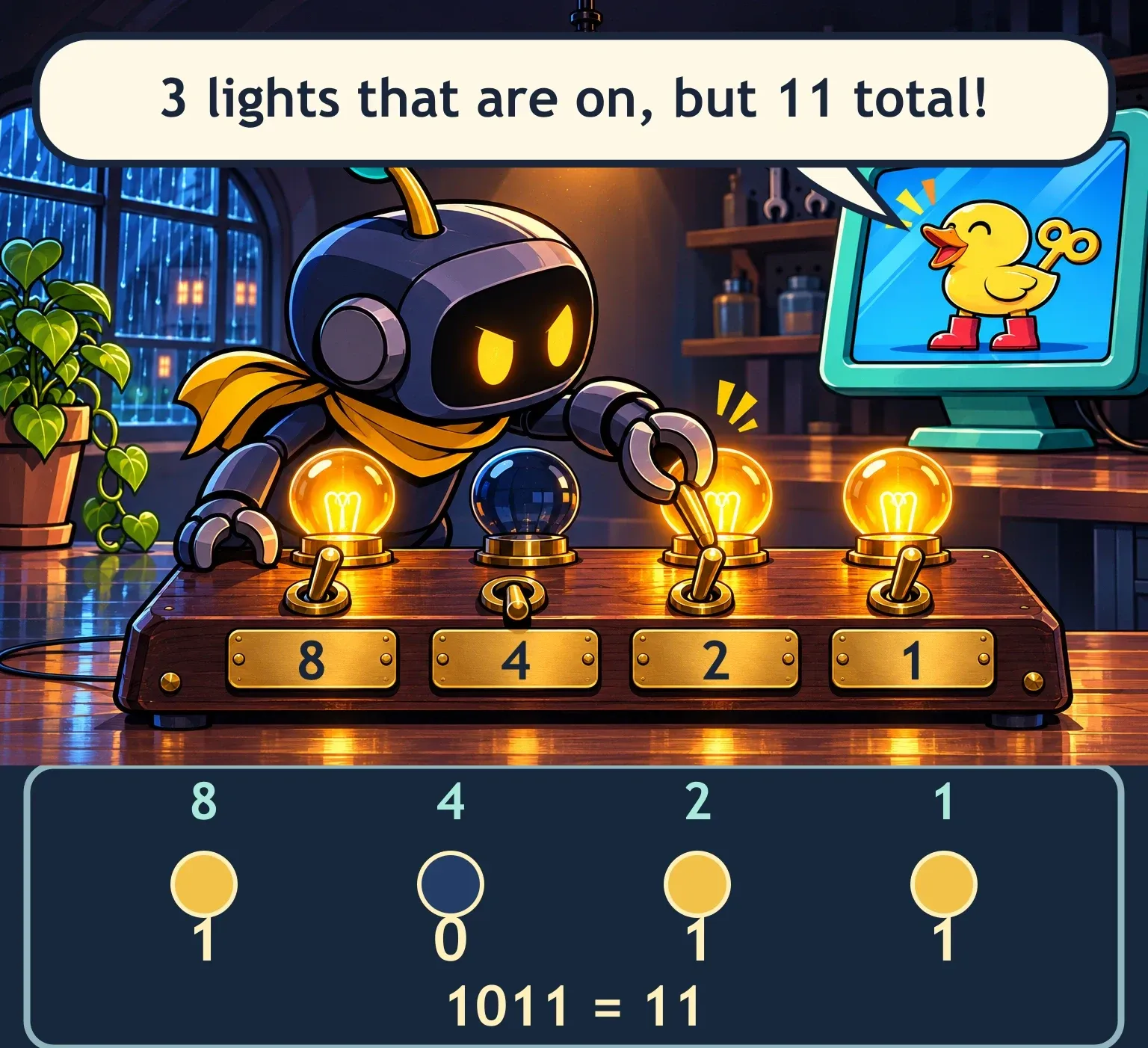
3 ON LAMPS. REPRESENTED VALUE: 11
Duck: 3 lights that are on, but 11 total!
The parade gate will open from correct 11 signal in monitor scene.
A new target
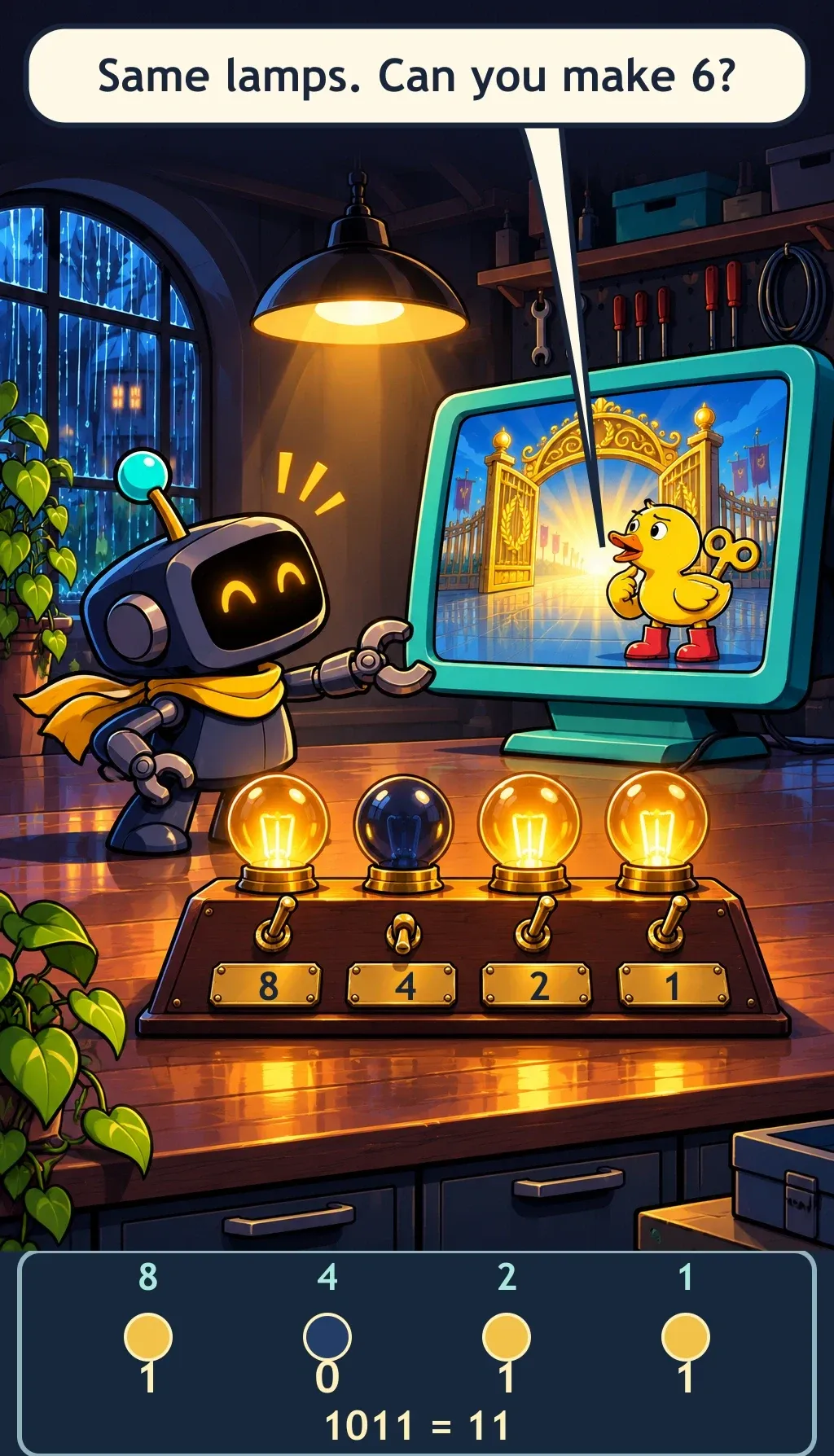
Duck has new ticket 6. Robot turns all 4 lamps off.
TARGET 6. RESET: 0000
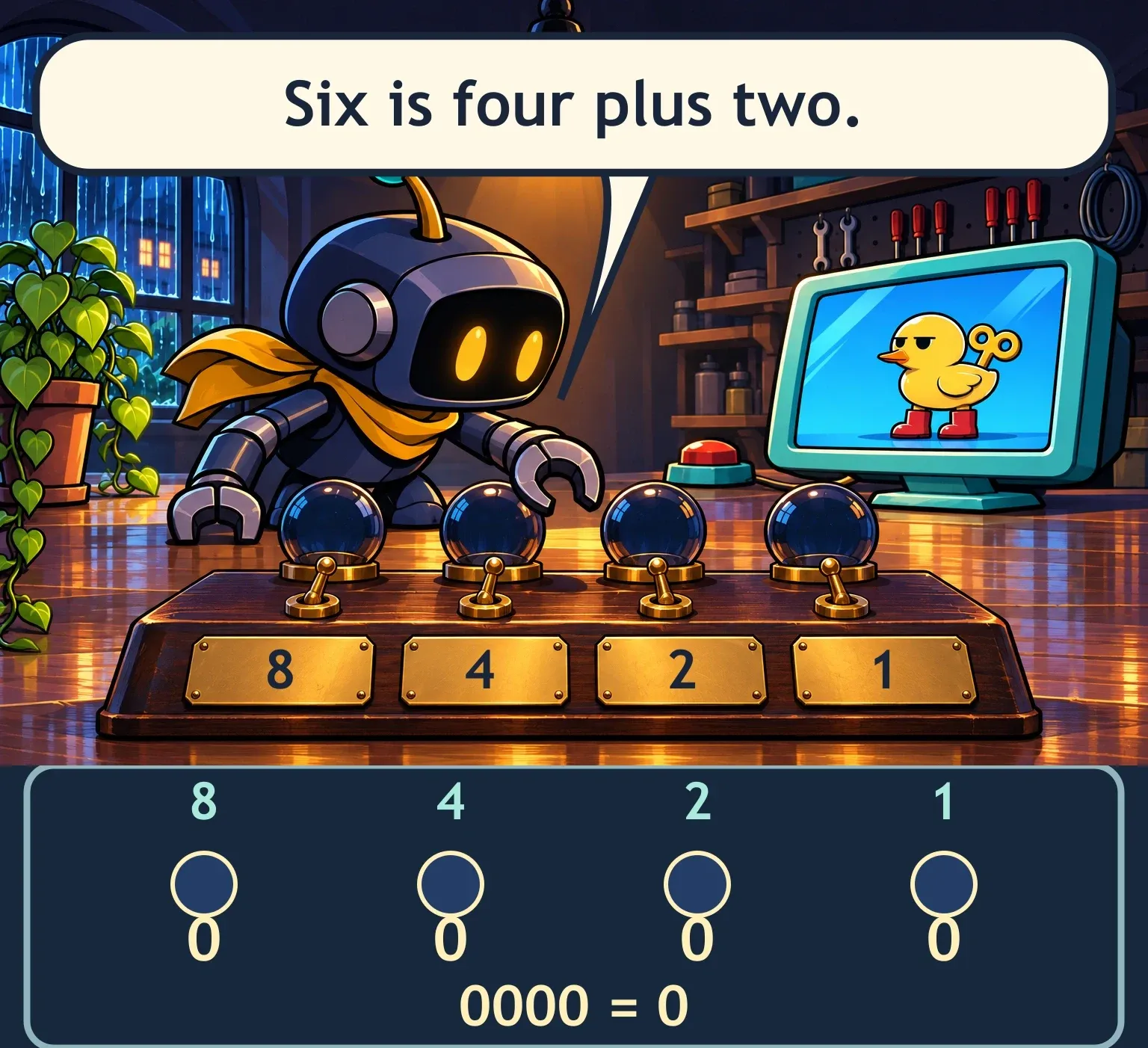
6 = 4 + 2
Robot: Six is four plus two.
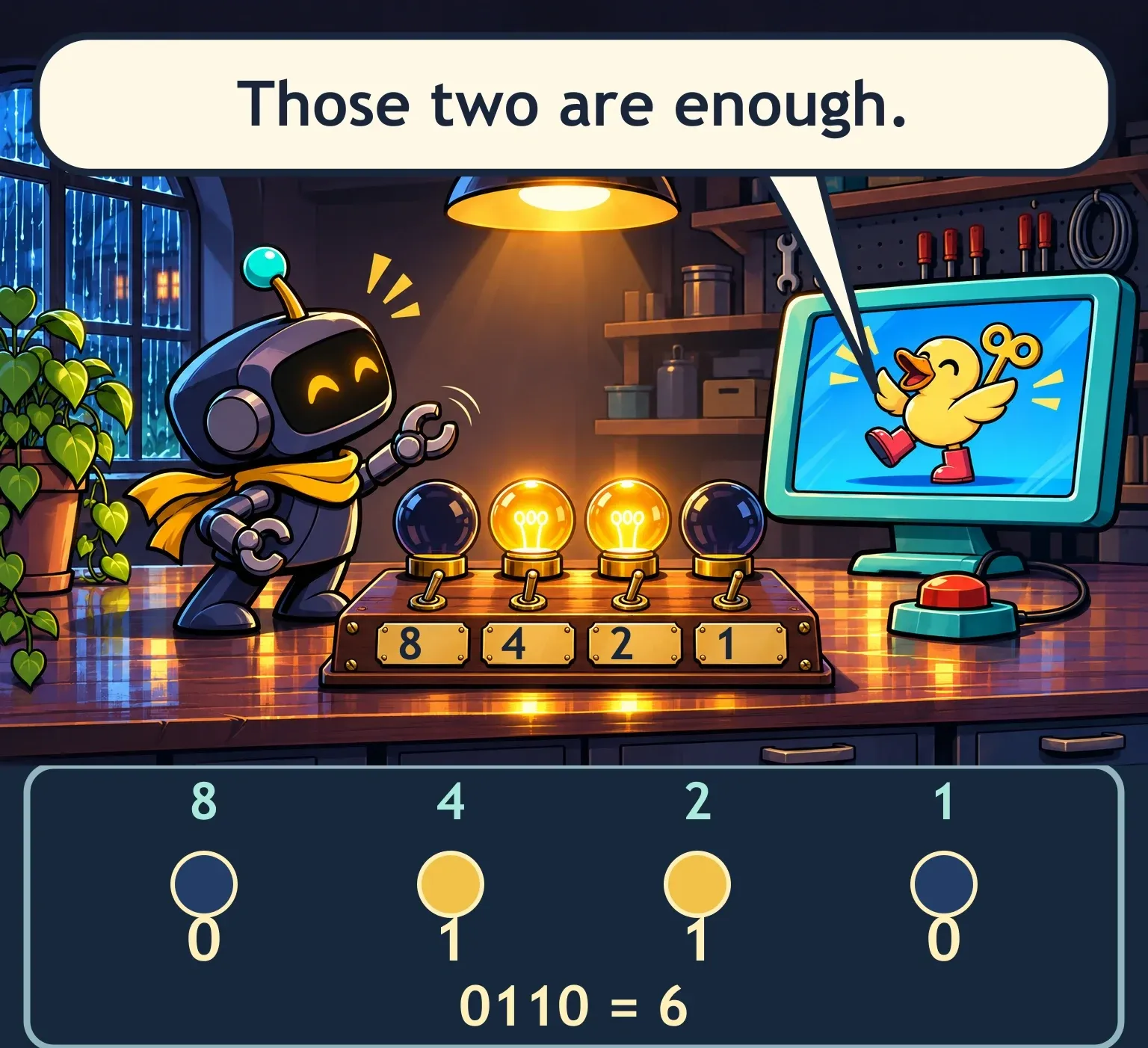
0110 → 0 + 4 + 2 + 0 = 6
Duck: Those two are enough.
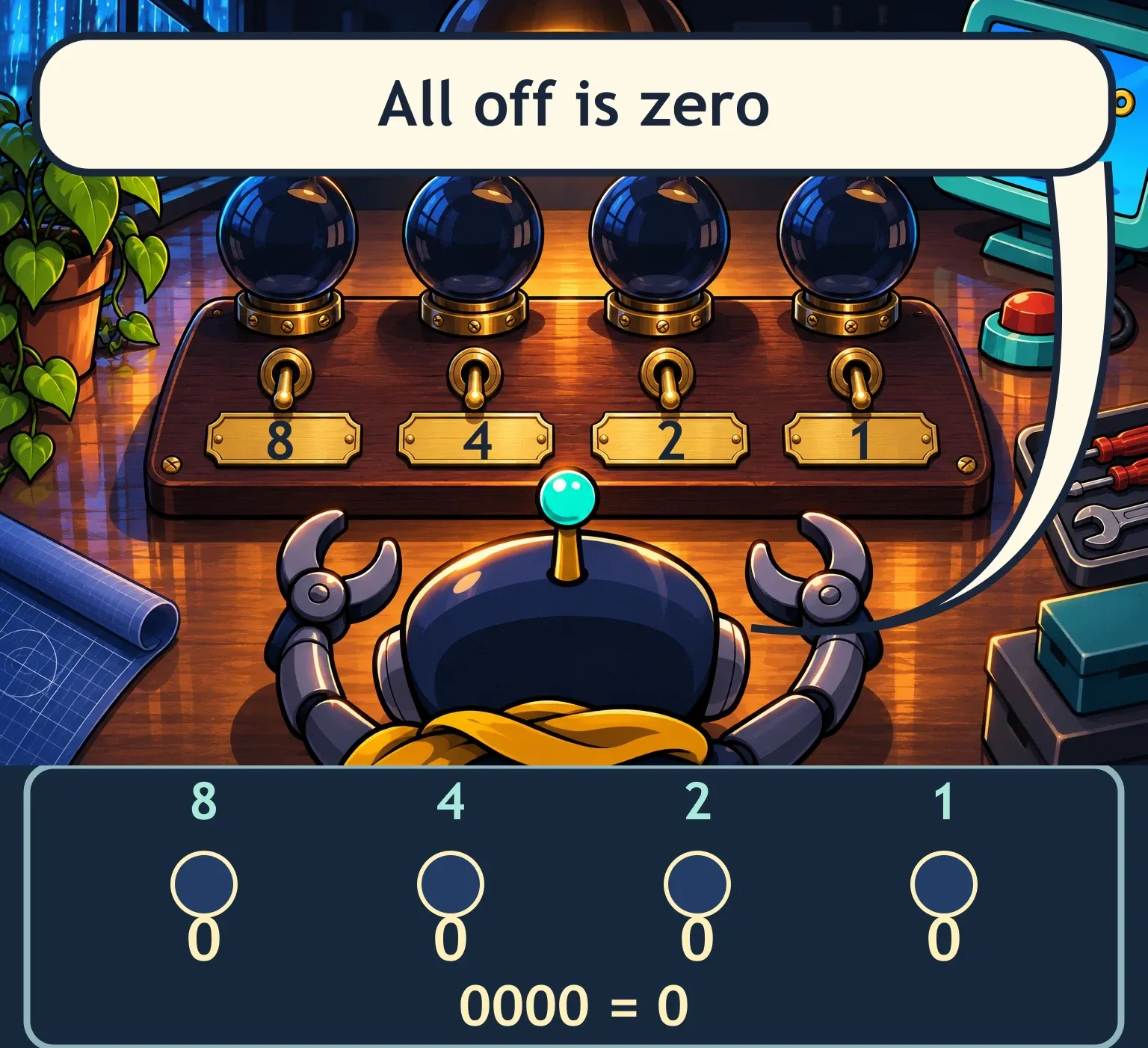
0000 → 0
Robot: All off is zero
The four-place limit
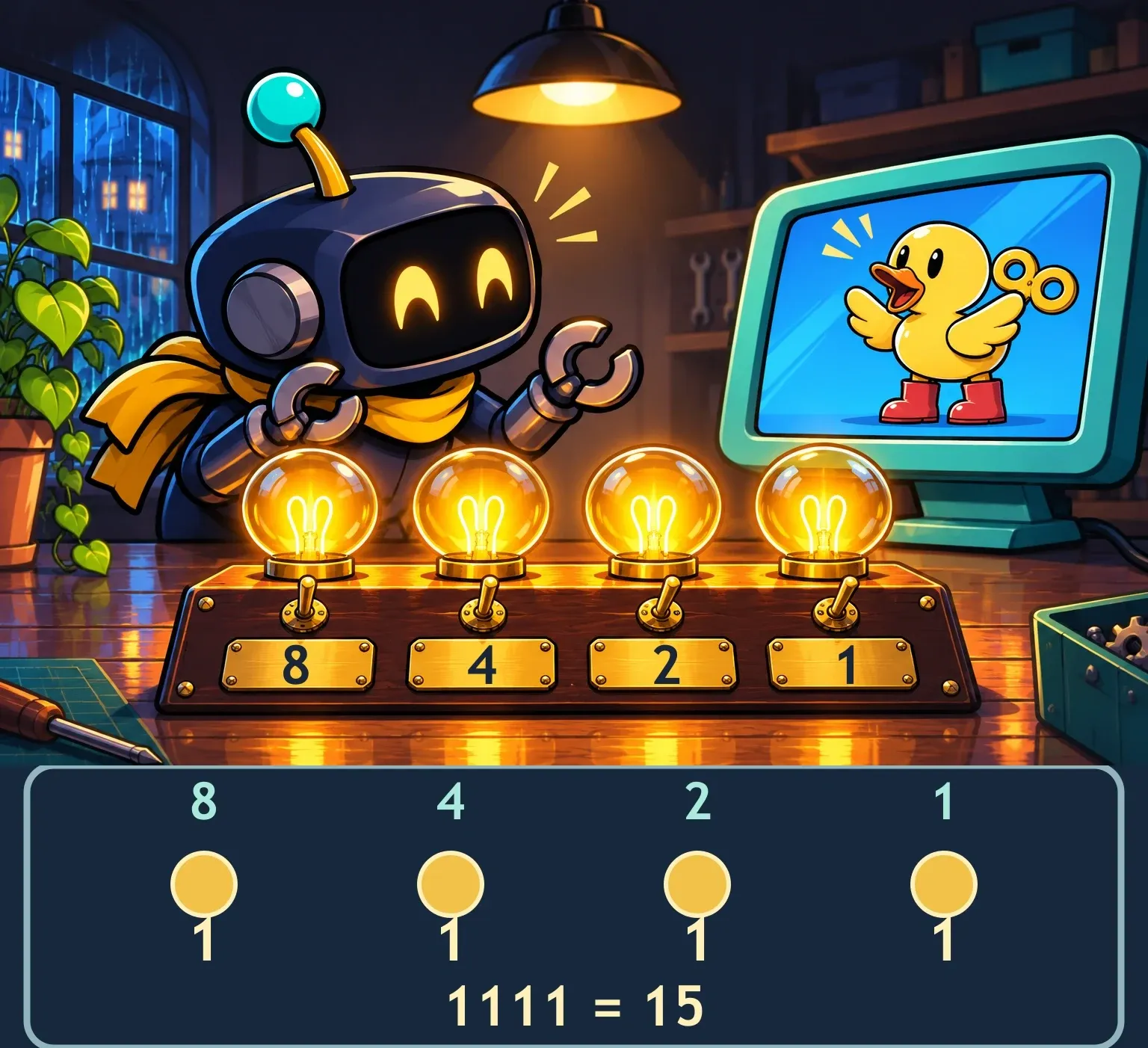
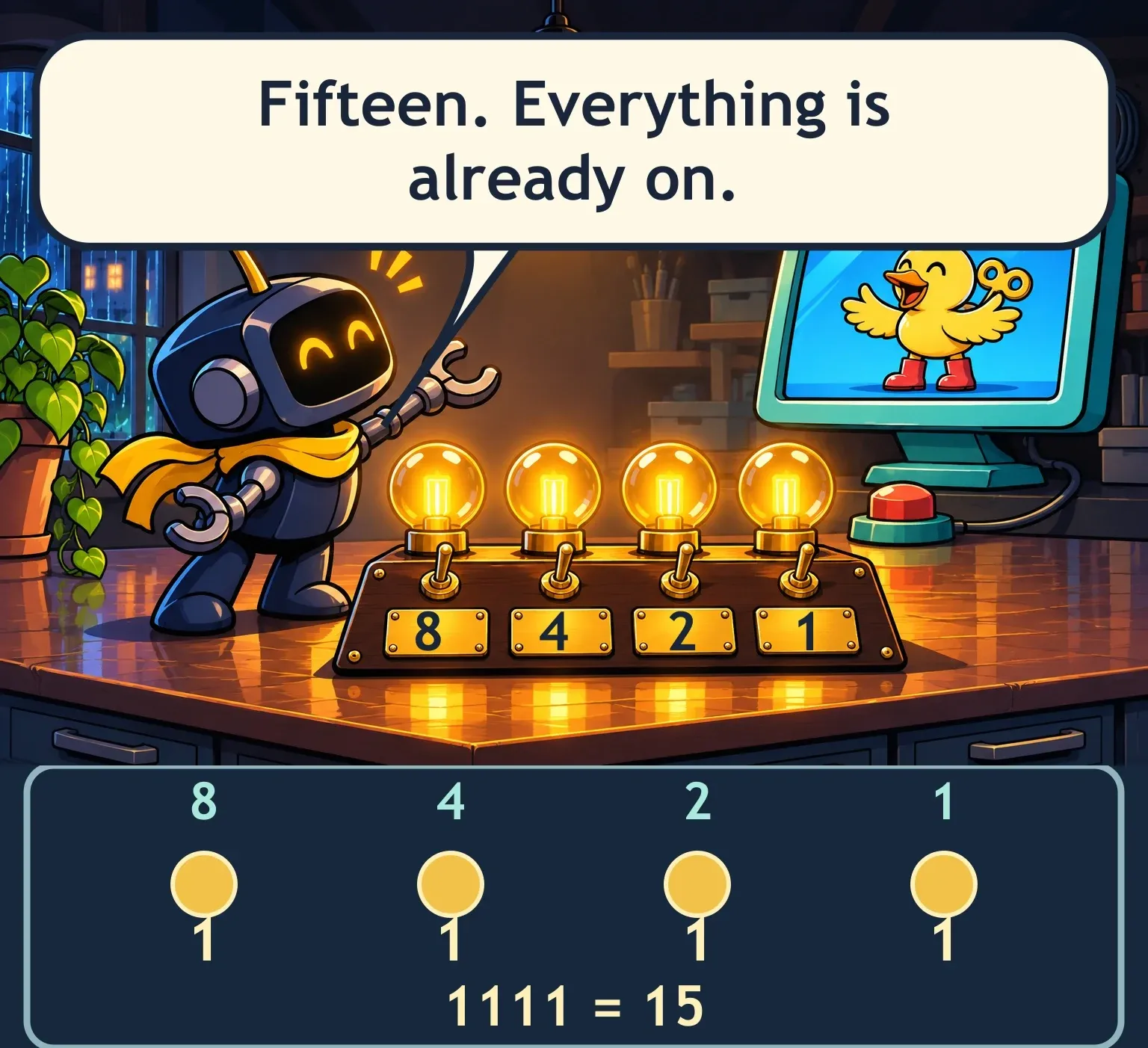
1111 → 8 + 4 + 2 + 1 = 15
Robot: Fifteen. Everything is already on.
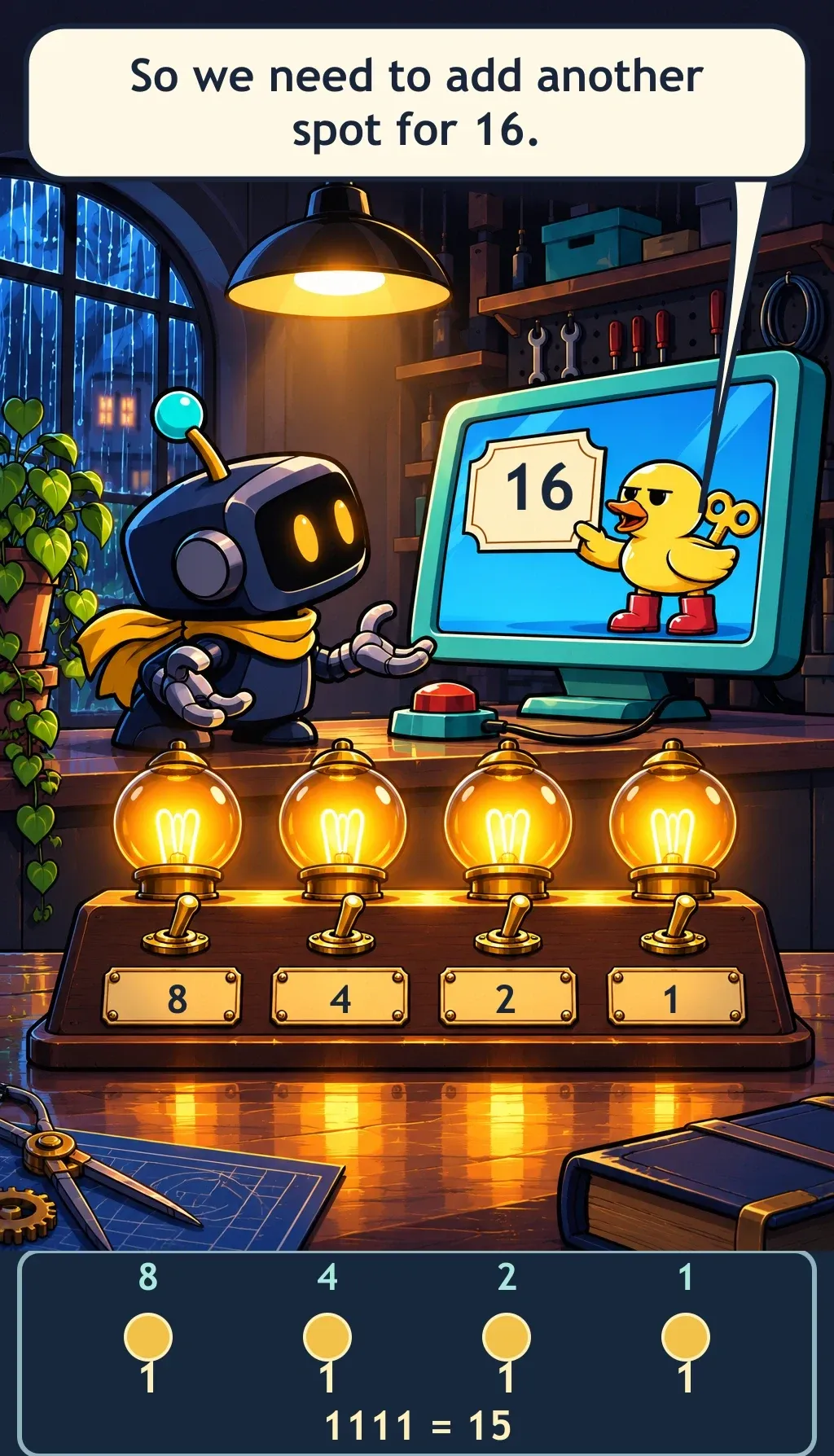
TARGET 16. FOUR-PLACE MAXIMUM: 15
Duck: So we need to add another spot for 16.
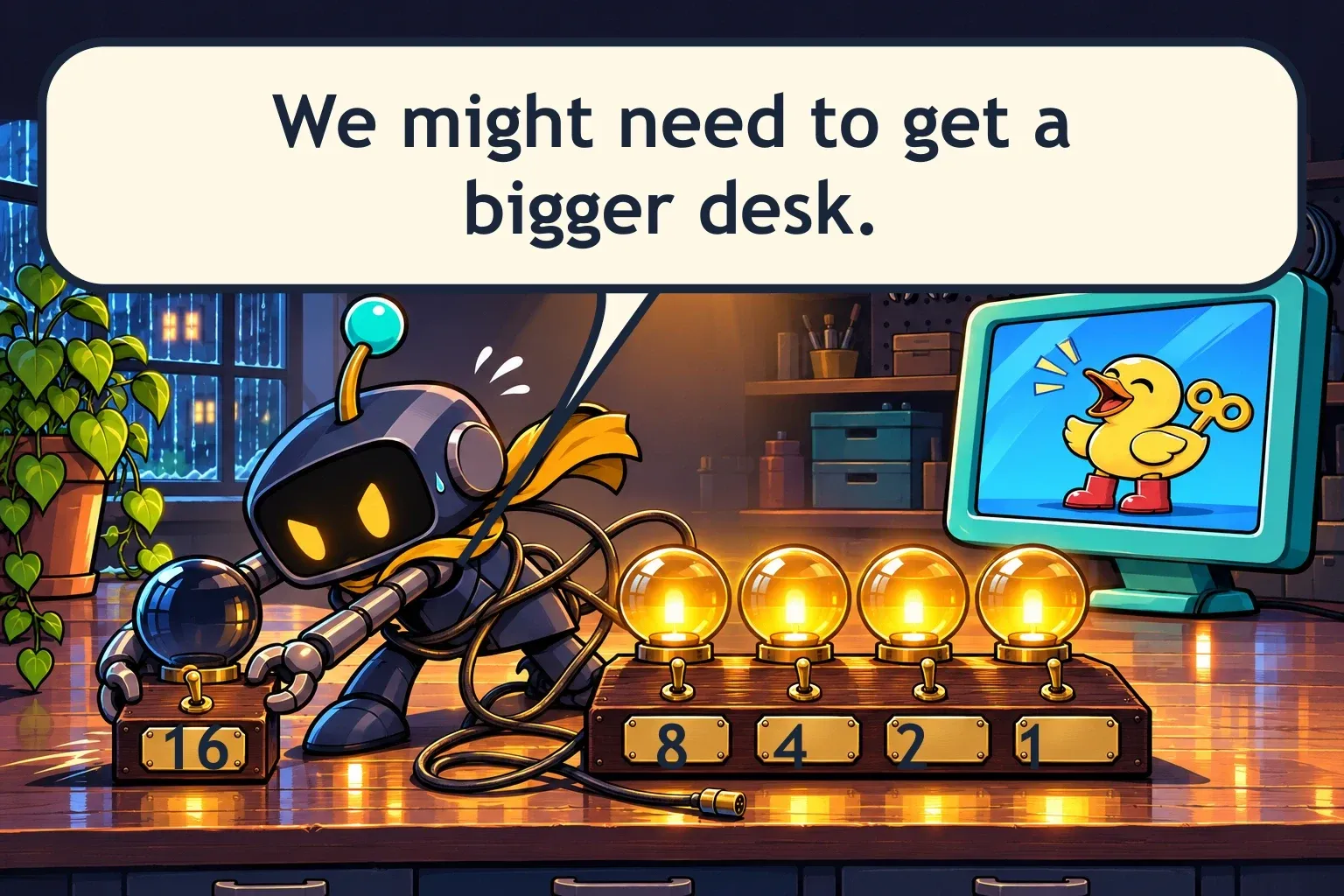
Robot: We might need to get a bigger desk.
Binary place values
Each lamp is 1-bit. A bit can be either 0 or 1 (off or on). You can encode digital information as those two states.
When you use unsigned binary, the values double with each step to the left
MOVING LEFT: 1 → 2 → 4 → 8 → 16. FOUR INDEPENDENT BITS: 2 × 2 × 2 × 2 = 16 PATTERNS
With 4 places that each can be on or off you have 16 unique values (all the whole numbers from 0 to 15). If you added another lamp it would be another place (worth 16).
LEFT → RIGHT: 8, 4, 2, 1
When you have a 1 you add the value of the place you are in. If you have a 0 it adds nothing. 1011 is adding 8 + 0 + 2 + 1 = 11. The number of 1's is not the number it represents. It is just the number of lit lamps you have which is 3.
FOUR UNSIGNED PLACES: 0000 = 0 THROUGH 1111 = 15
Try nine
SAME PLACES: 8, 4, 2, 1. START WITH ALL OFF.
Answer
1001 → 8 + 0 + 0 + 1 = 9
Code is now 1001, summing to 9. Once values add up to the target, stop. Changing order of place labels changes meaning of shown code.
Sources
Computer Science Field Guide, Numbers: representing whole numbers in binary (opens in a new tab)