 HoldMyTwist
Episode 8
The Light That Flipped
One more test shows how adding just one check bit can detect some kinds of damage but miss modified data.


Episode transcript
A check bit joins the signal
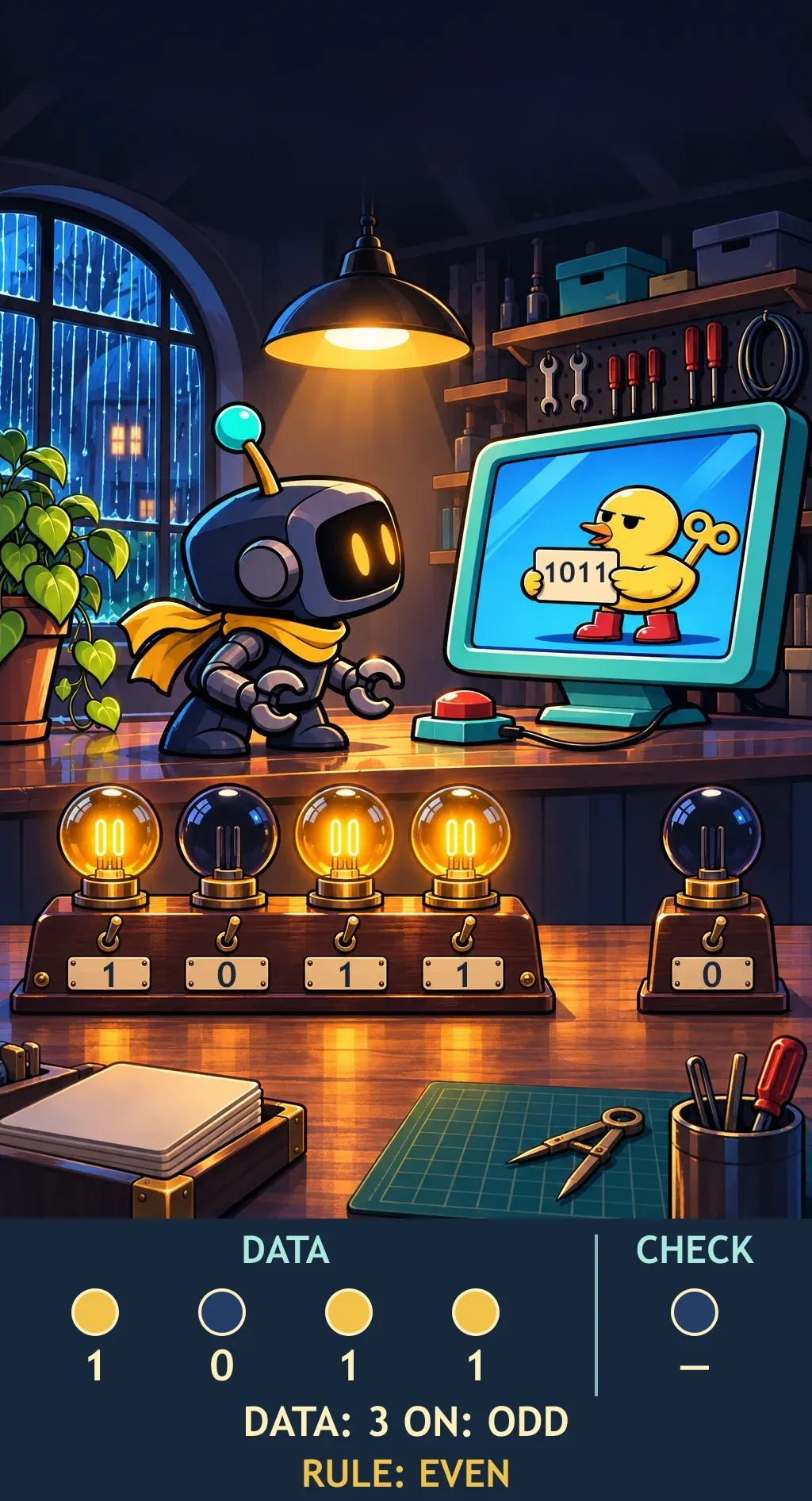
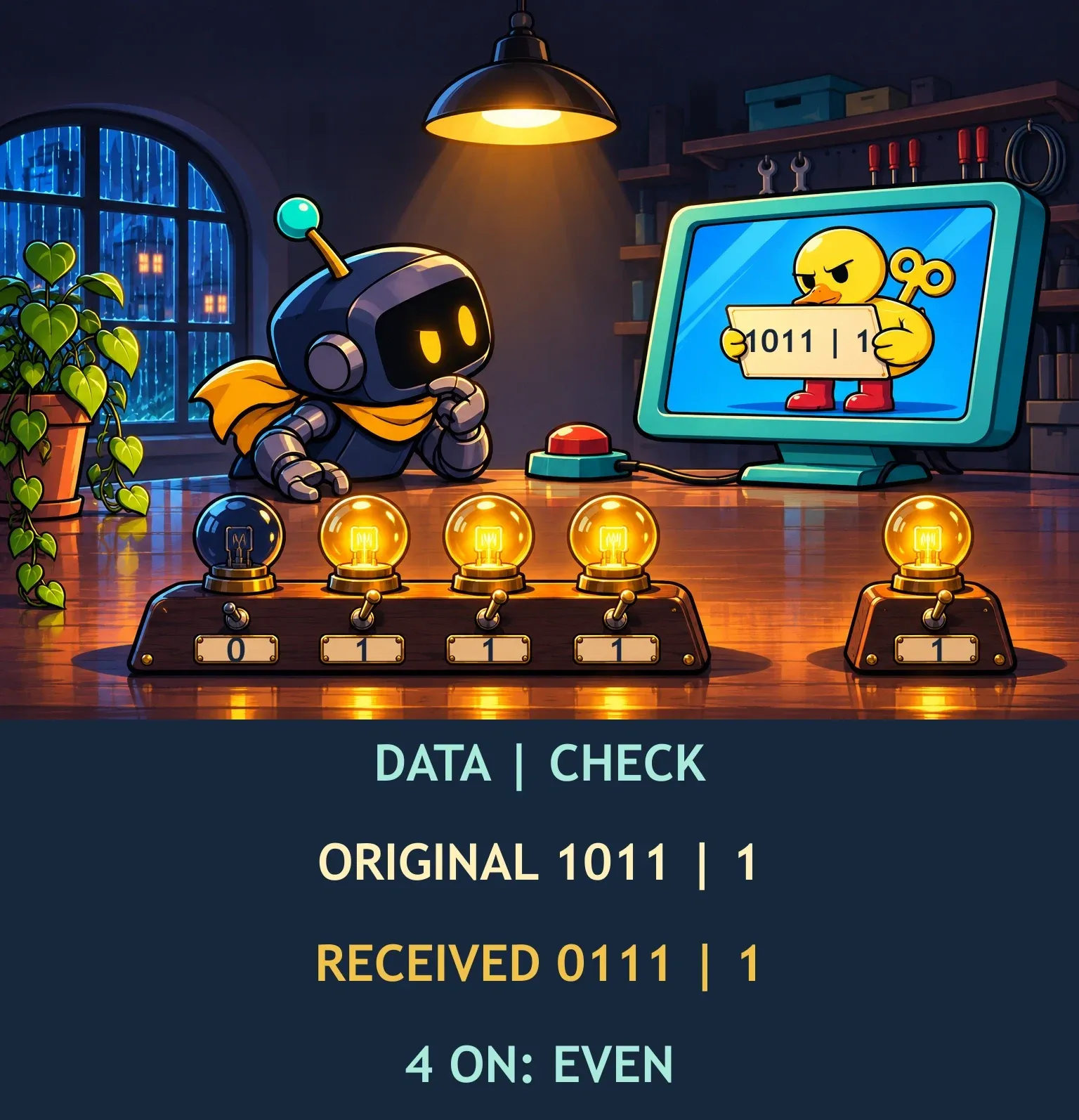
The data is 1011.
DATA: 1011
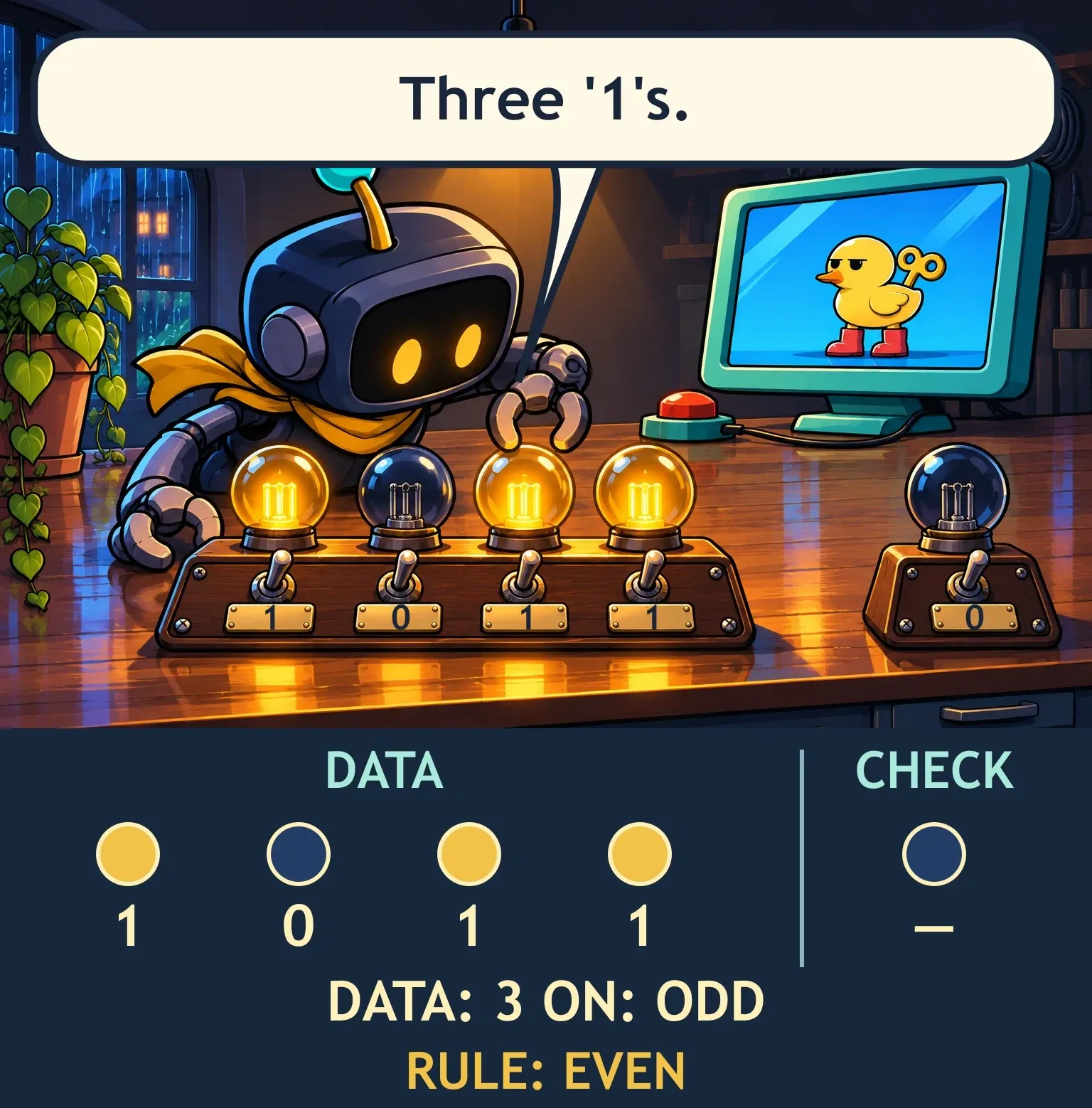
Robot sees the 3 '1's in data 1011.
DATA ONES: 3 (ODD)
Robot: Three '1's.
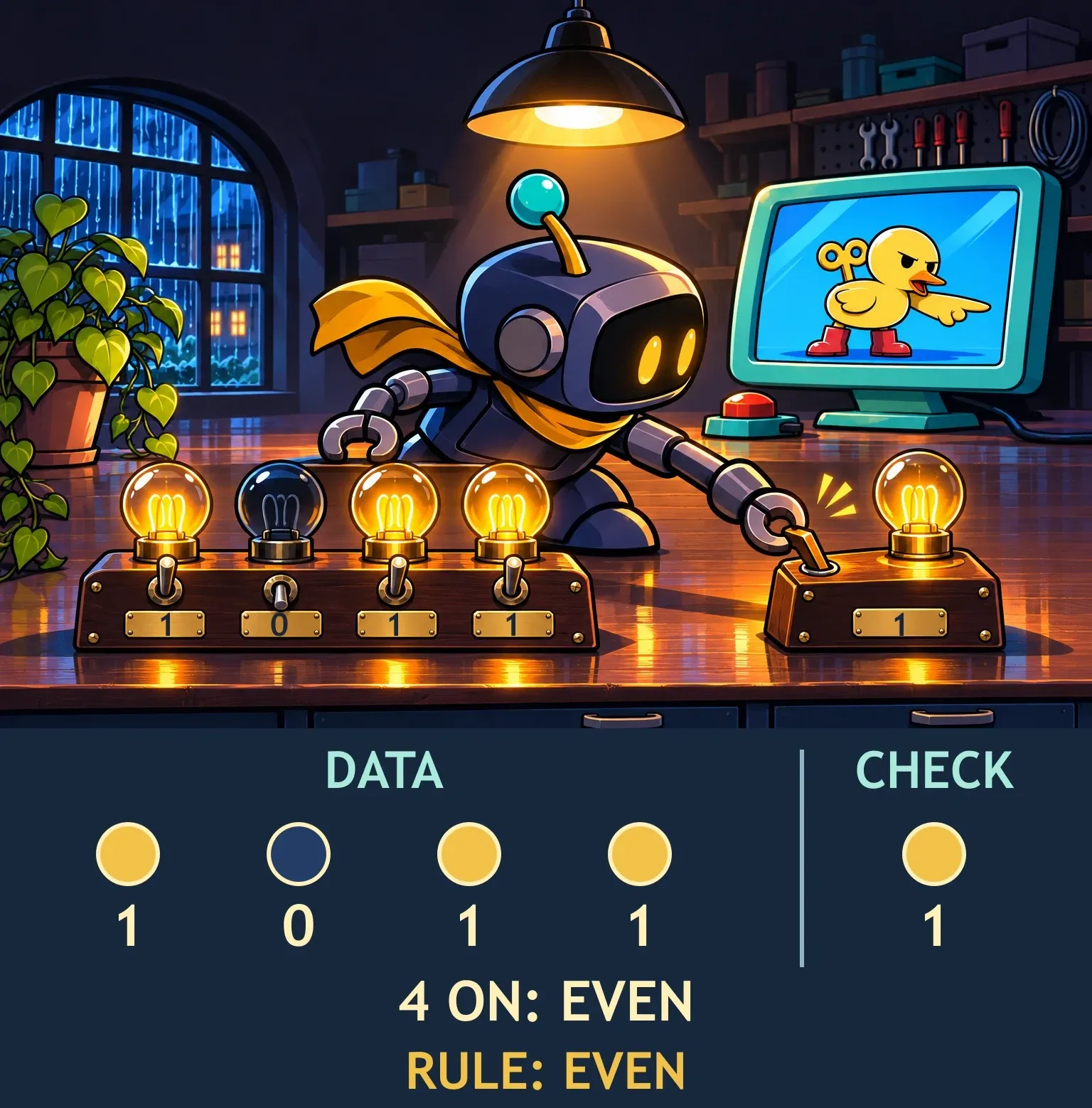
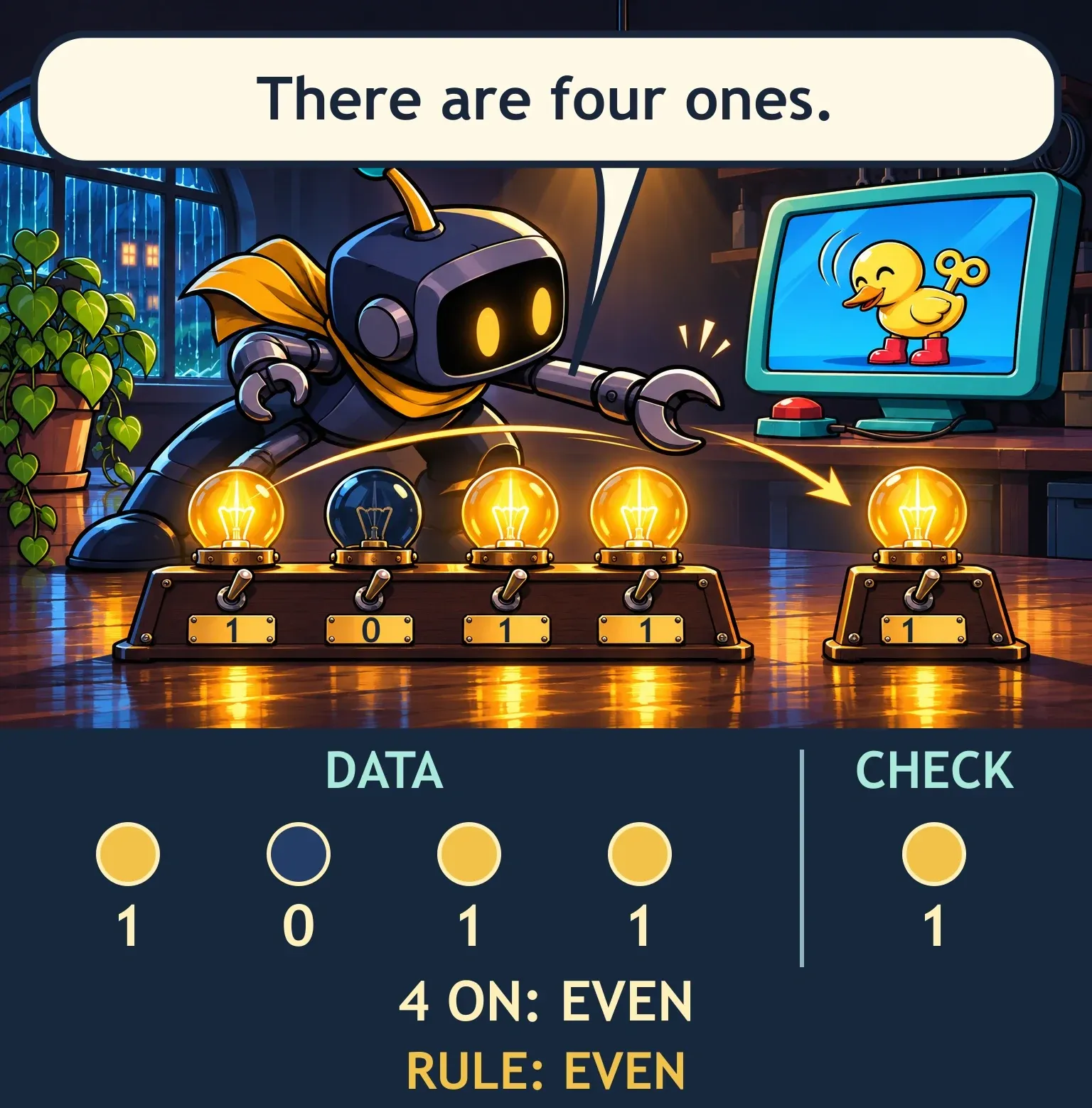
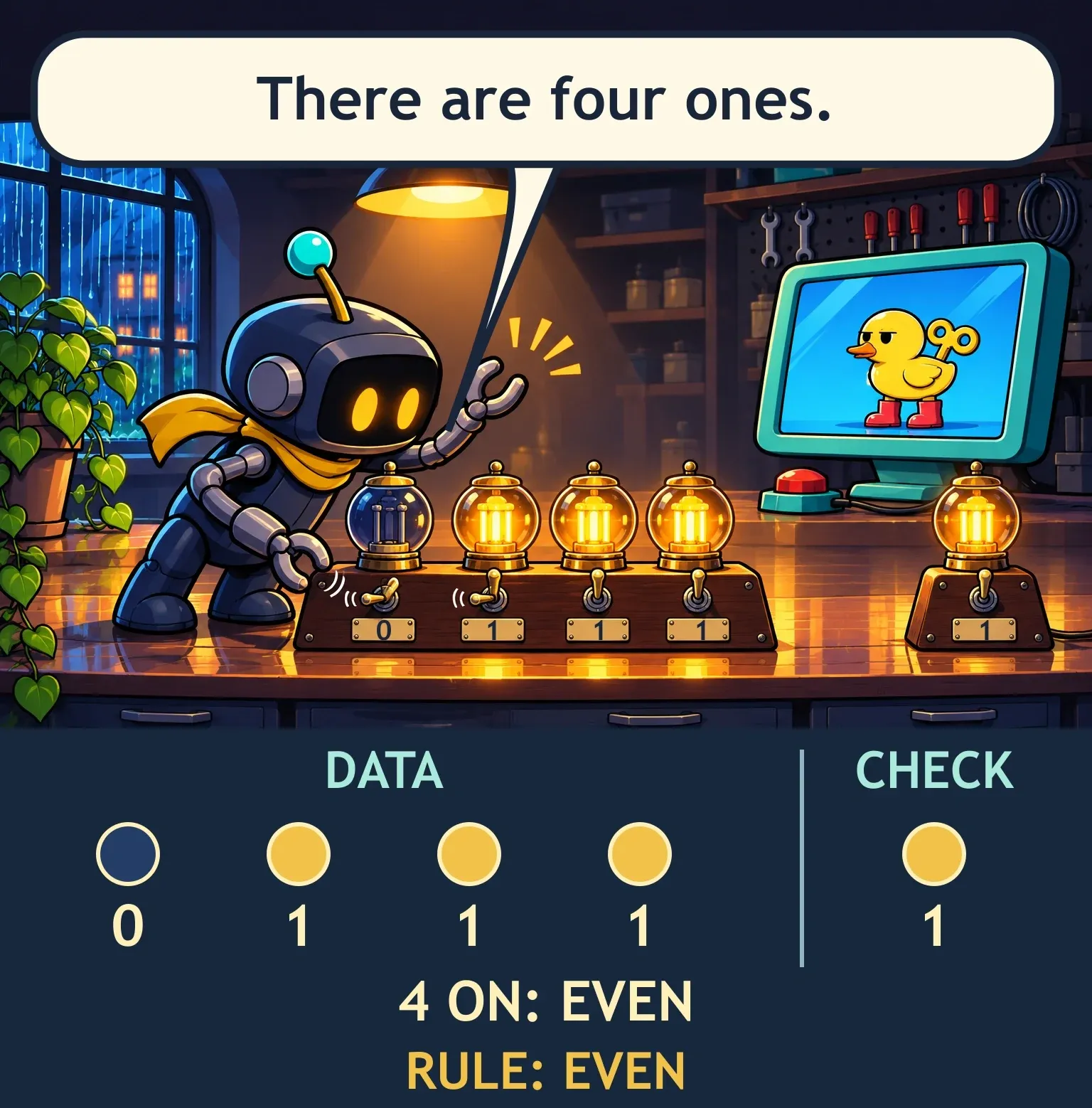
DATA 1011 | CHECK 1 → TOTAL ONES 4 (EVEN)
The signal is still 1011|1.
COUNT DATA + CHECK
Robot: There are four ones.
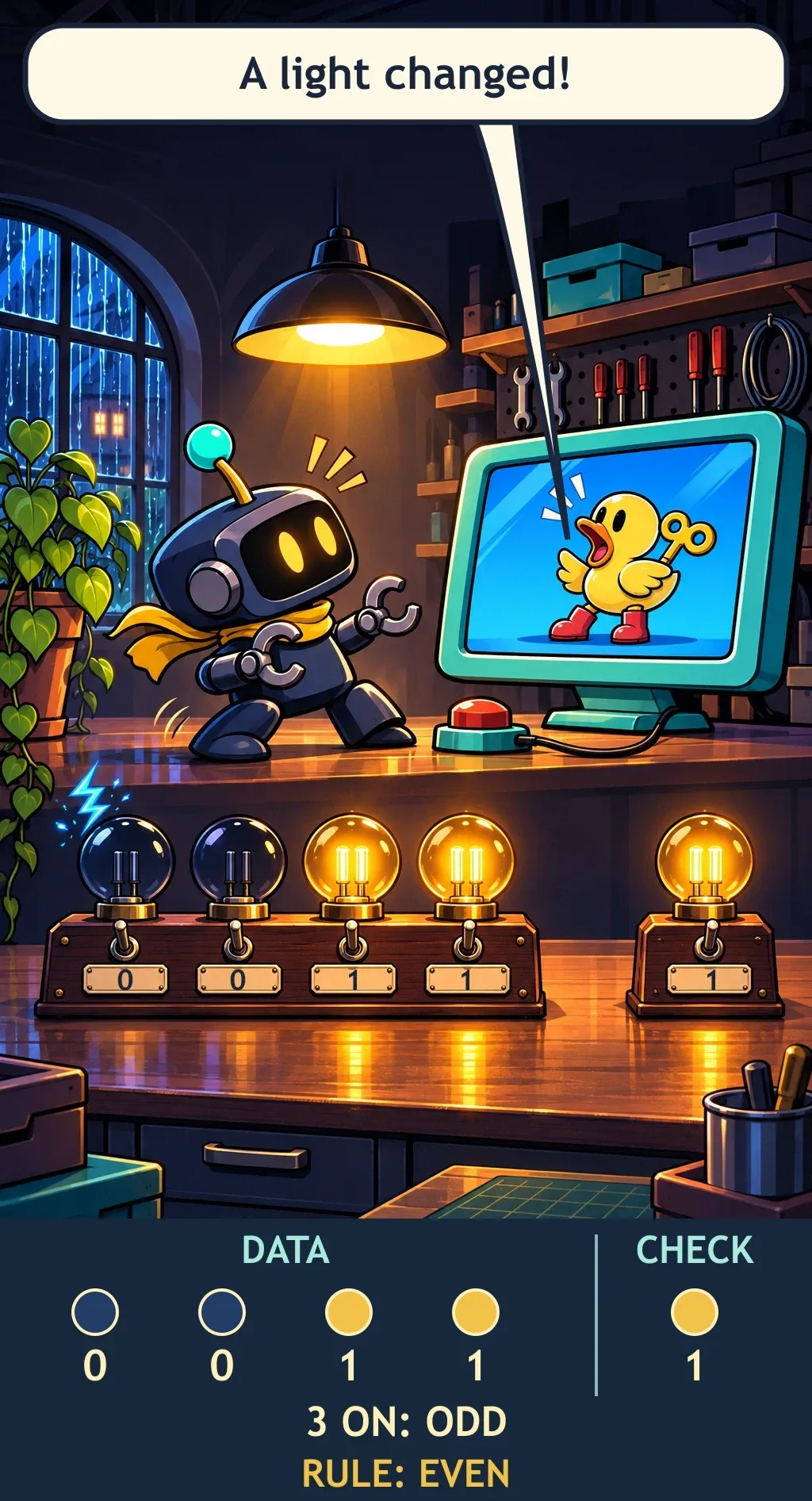
One light changes
The separate check bit is still 1.
FIRST DATA BIT: 1 → 0. CHECK STAYS 1
Duck: A light changed!
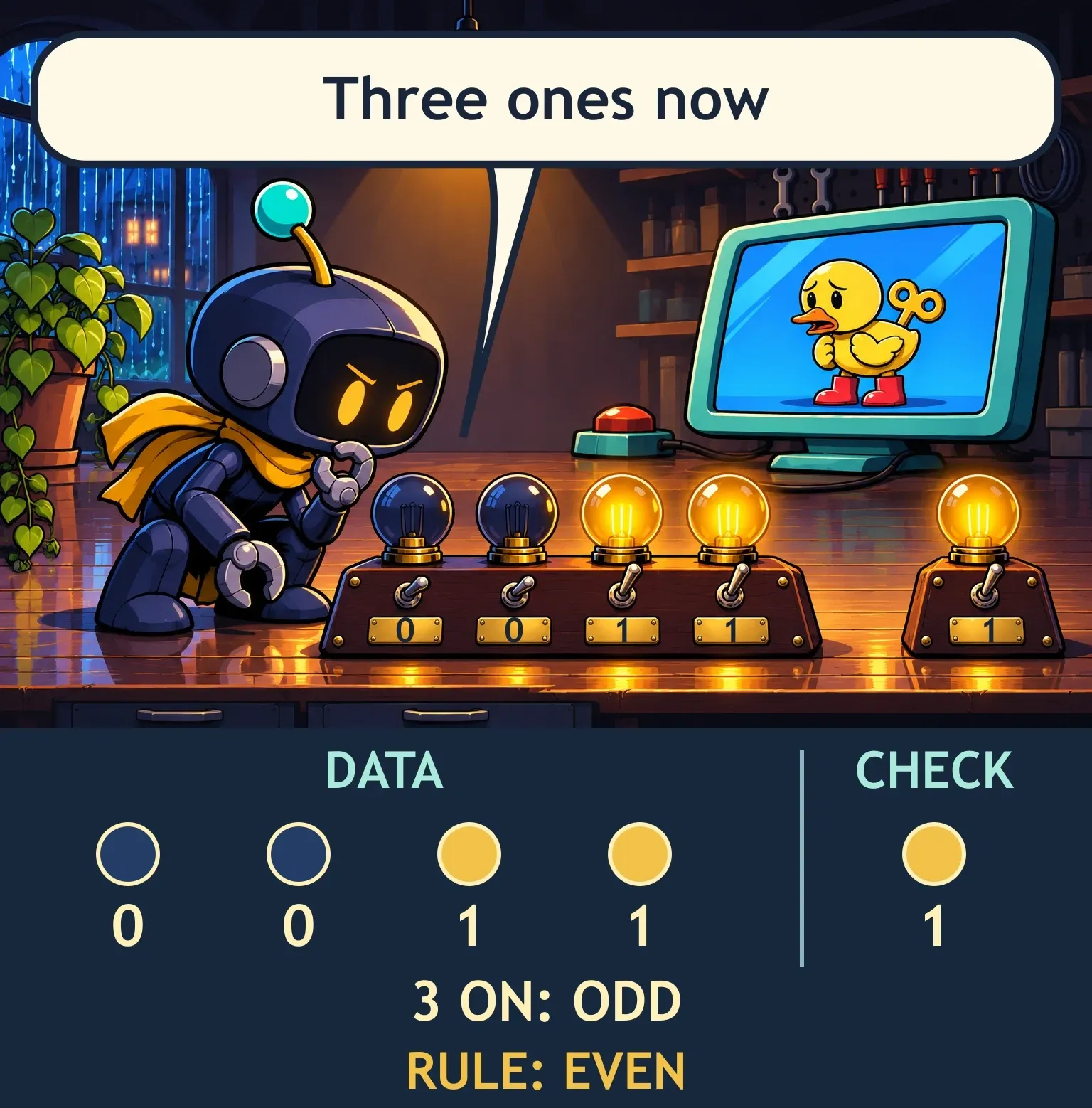
RECEIVED 0011 | 1 → TOTAL ONES 3 (ODD)
Robot: Three ones now
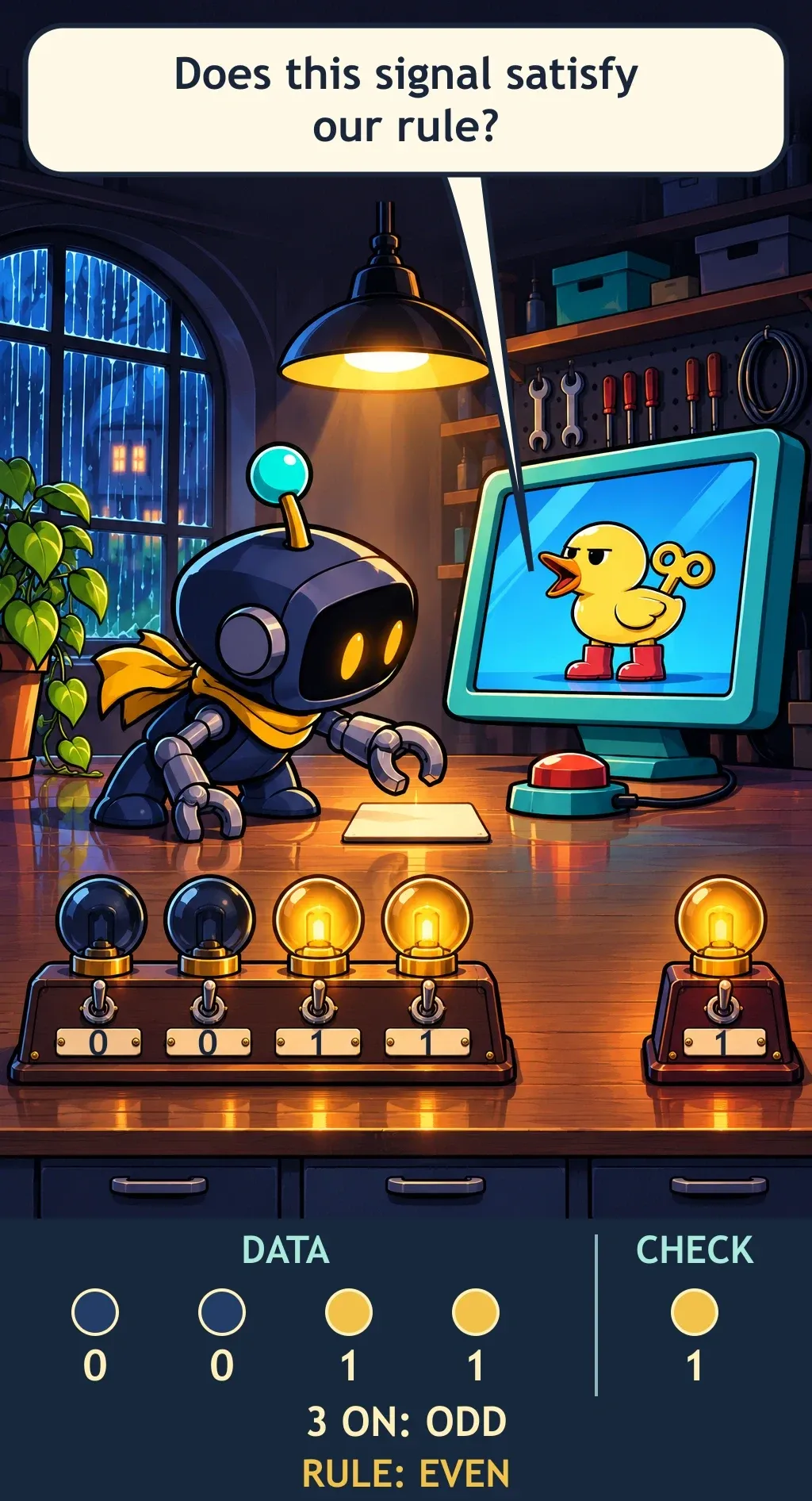
The rule that's settled upon is that the total should be even. But the total of the signal that we get is odd.
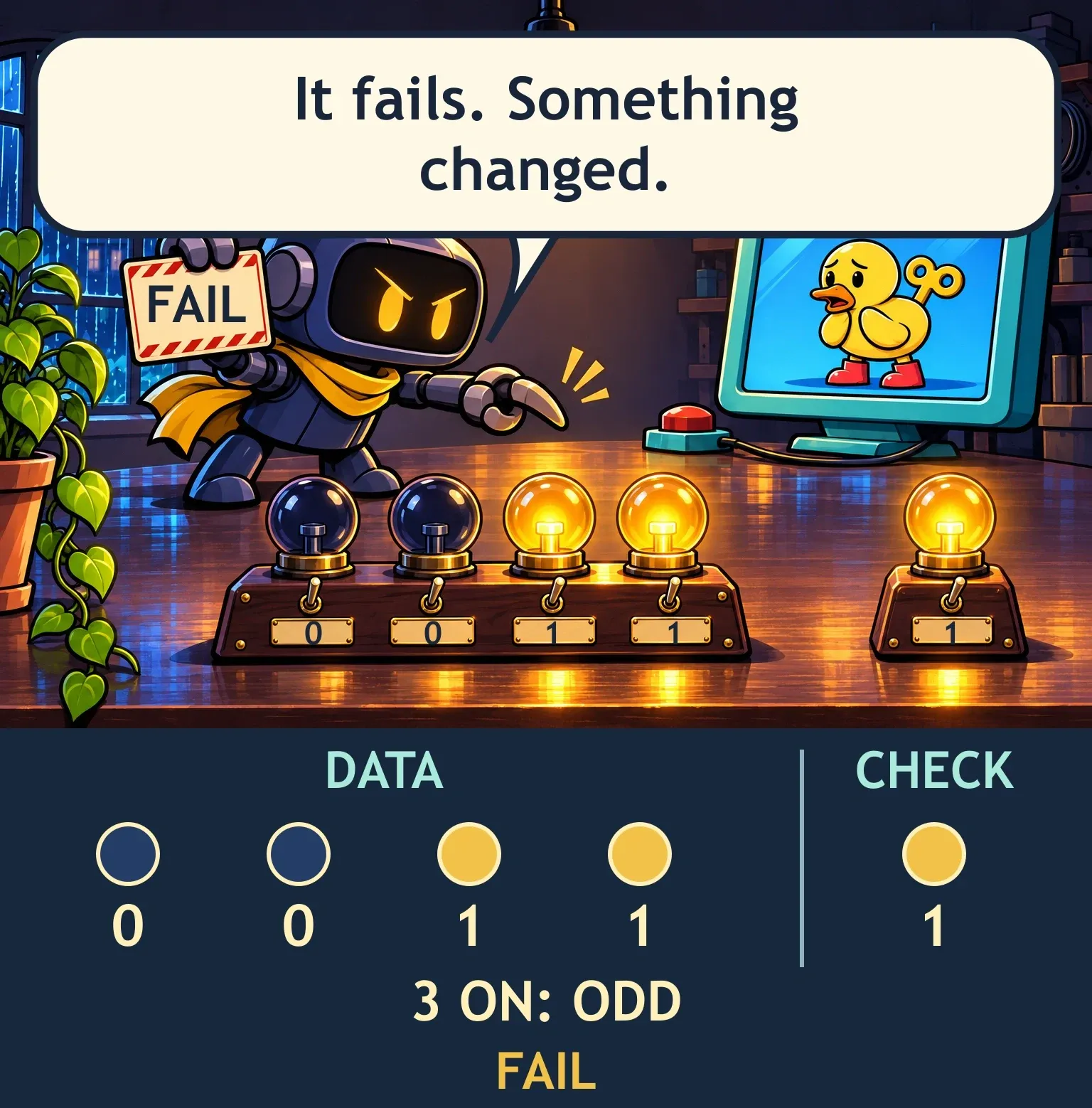
Robot detects the received 0011|1 signal as failing parity.
ODD TOTAL → FAIL
Robot: It fails. Something changed.
A failed check cannot locate damage
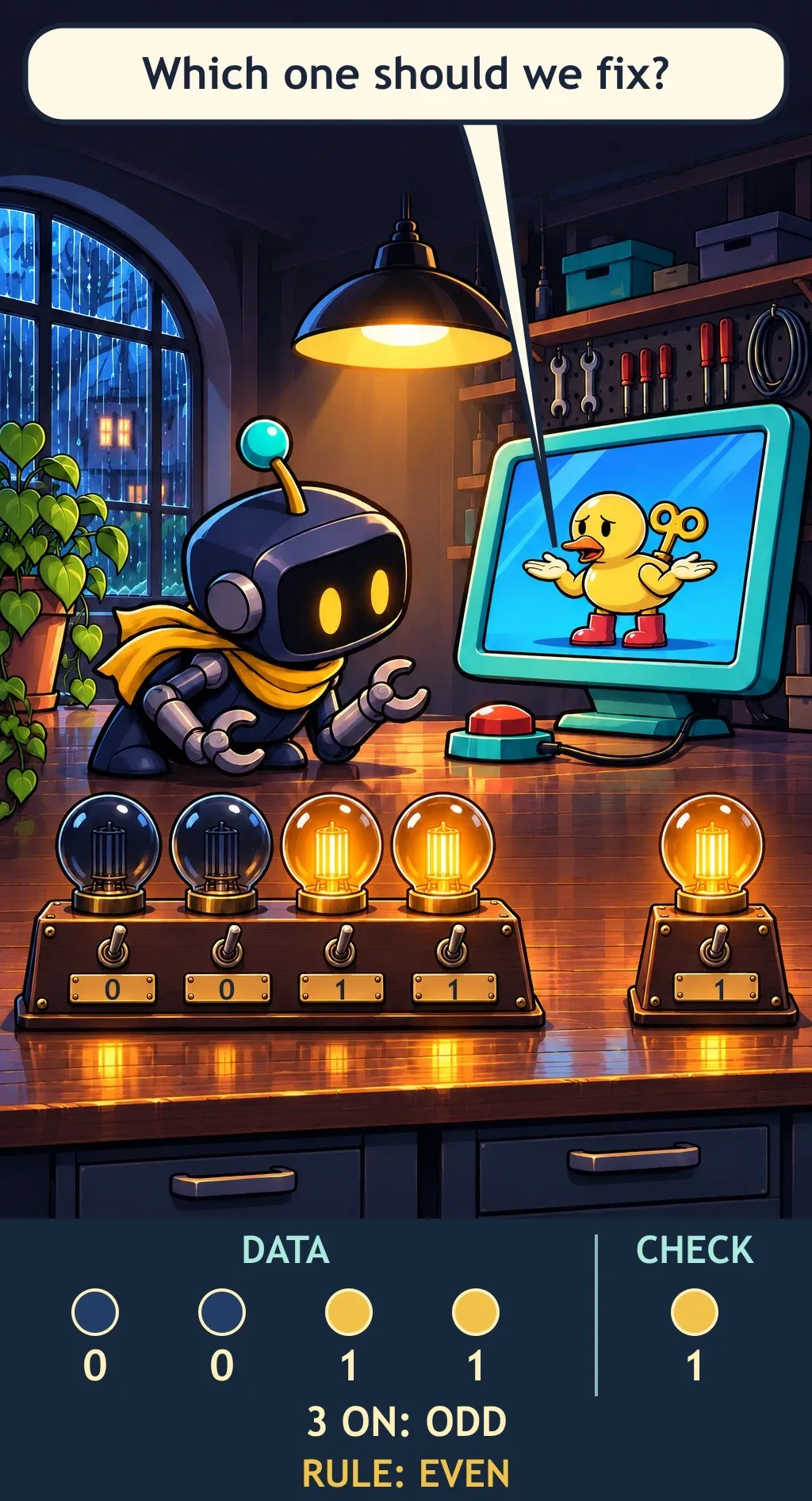
Duck points at all five places that have signals. He doesn't know which one it was.
Duck: Which one should we fix?
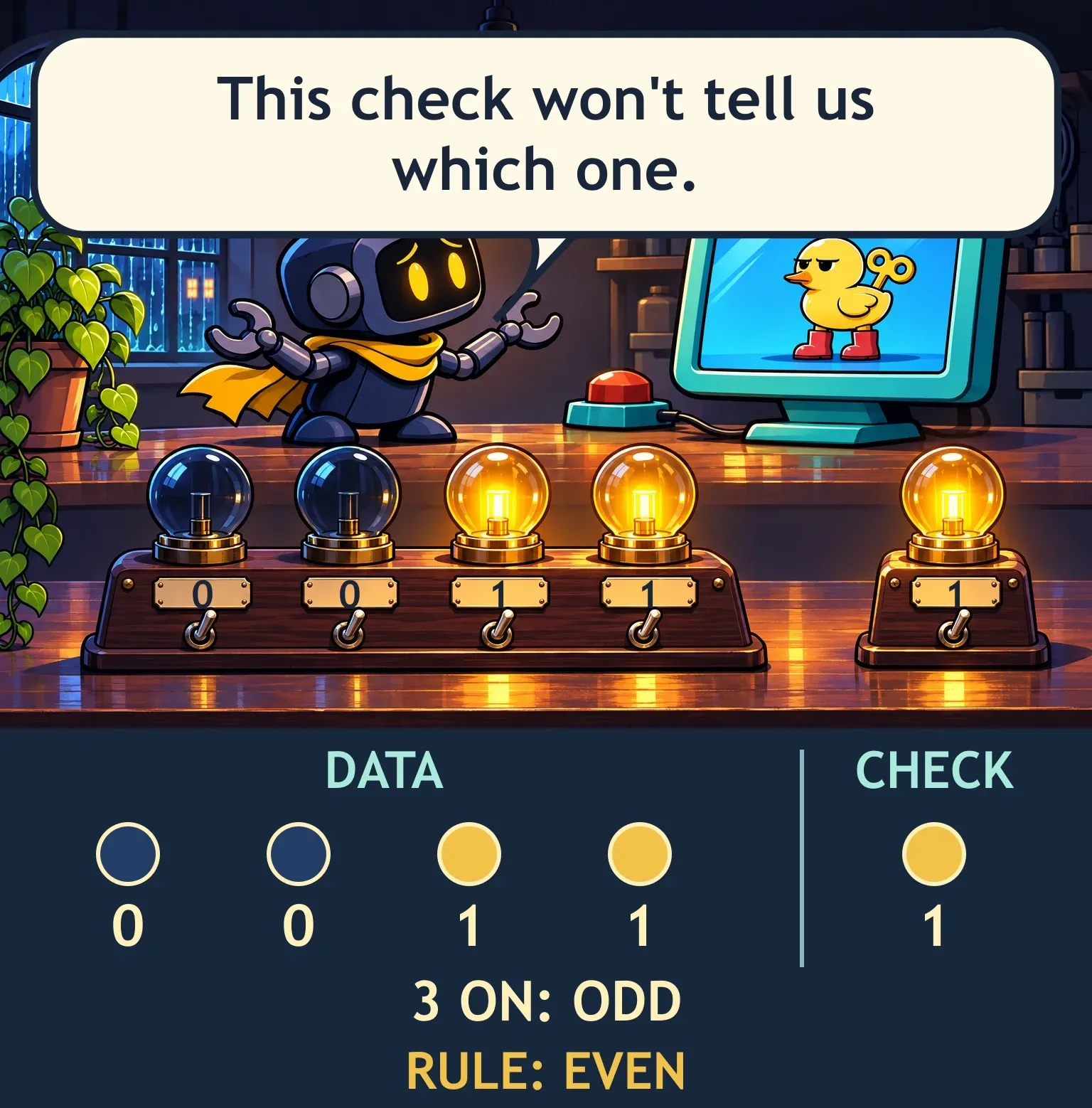
Robot lists multiple possibilities for individual bits that could be flipped to change the parity. There's no specific location identified by the parity result.
PARITY DOES NOT IDENTIFY THE CHANGED POSITION
Robot: This check won't tell us which one.
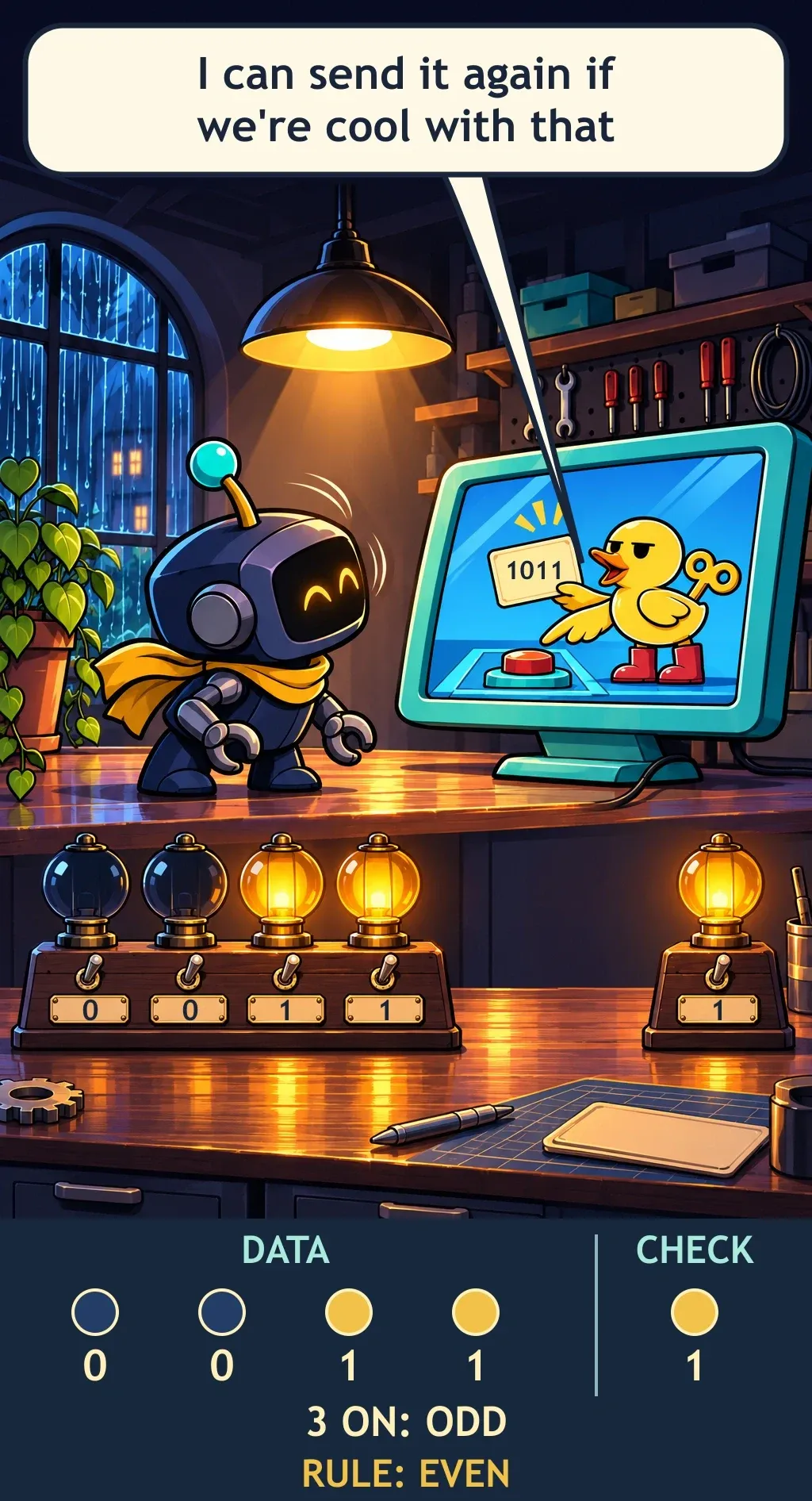
RESEND REQUIRES A SEPARATE AGREEMENT
Duck: I can send it again if we're cool with that
They agree to get a new message.
Two flips can pass
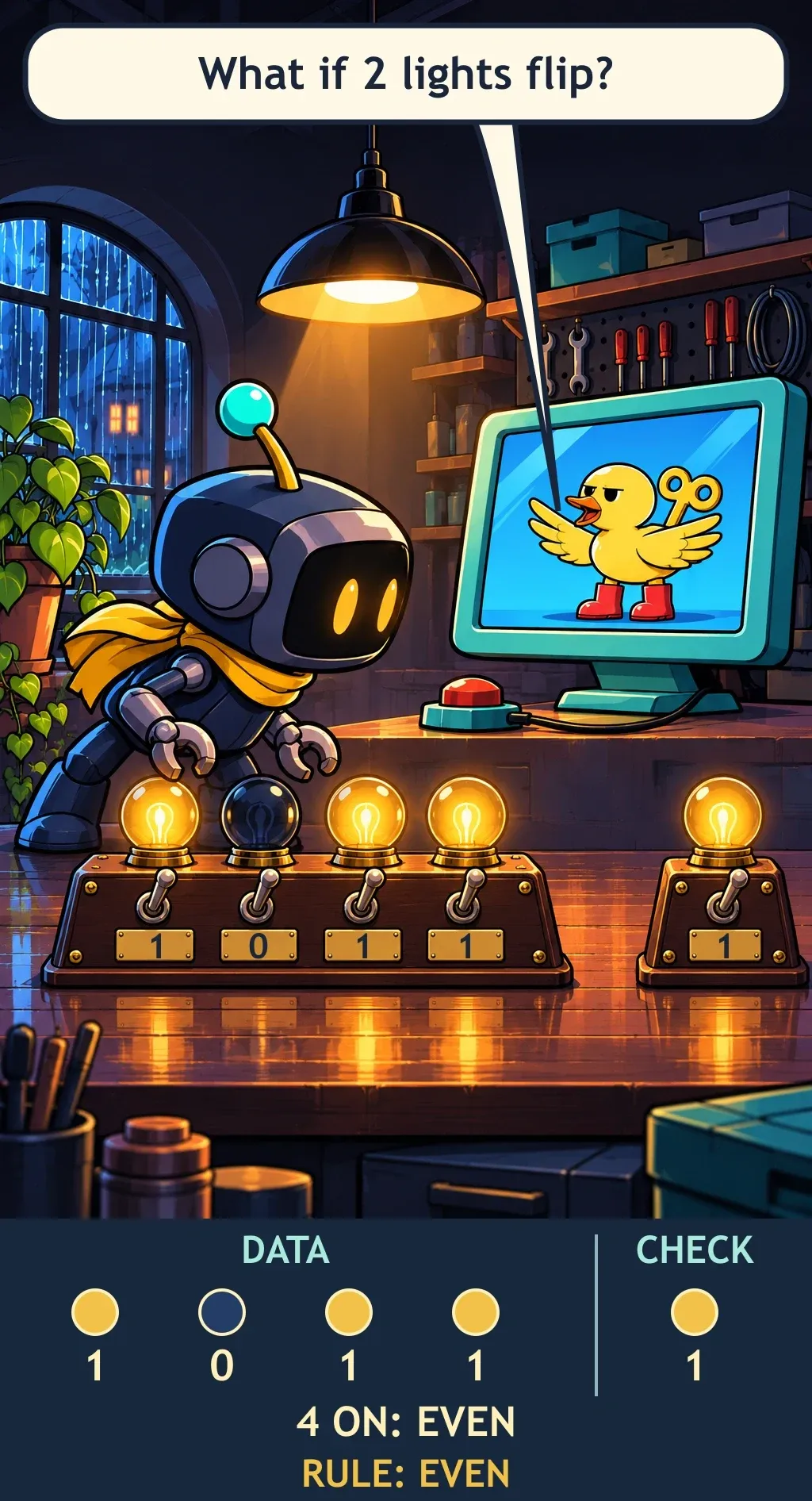
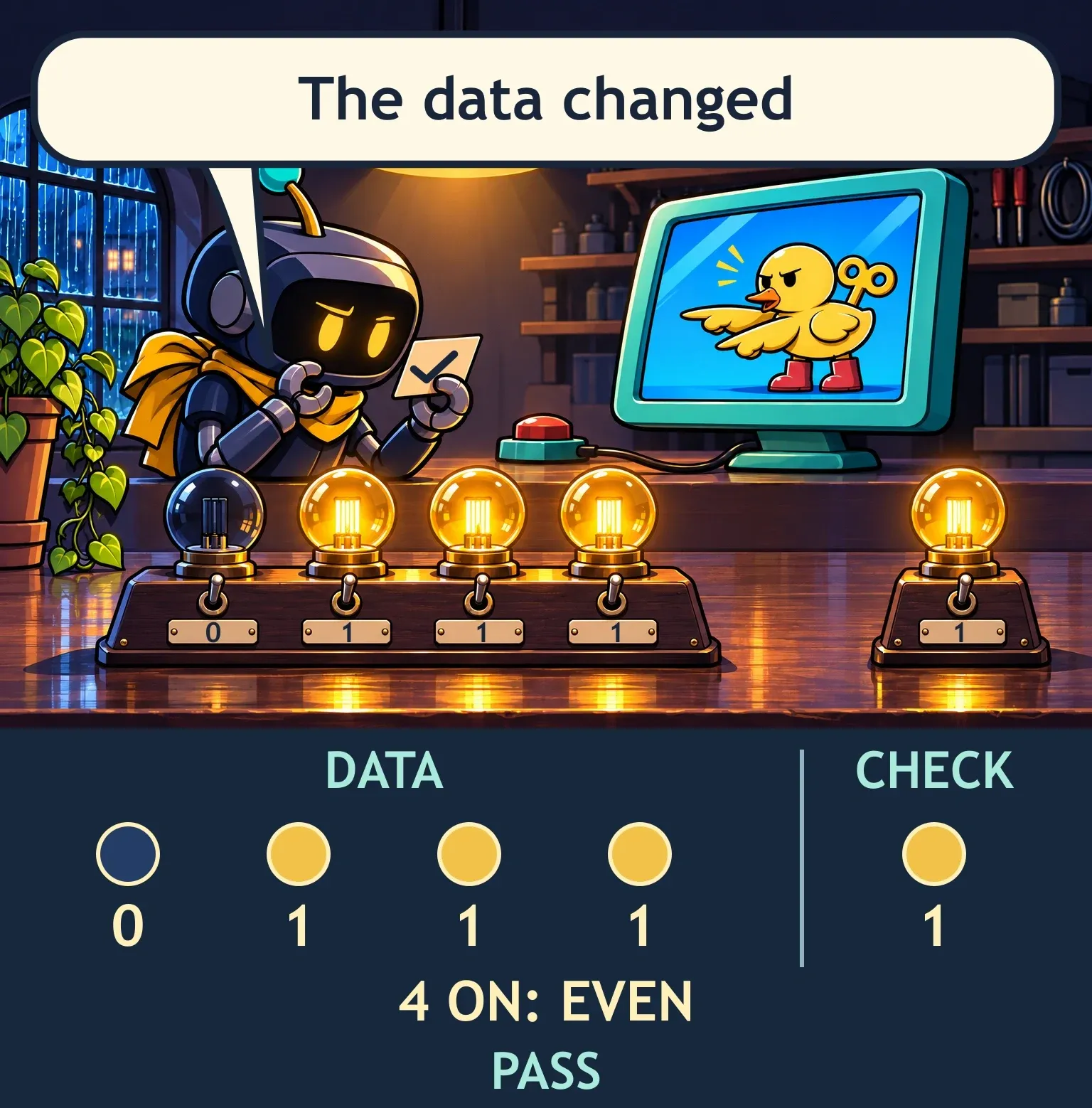
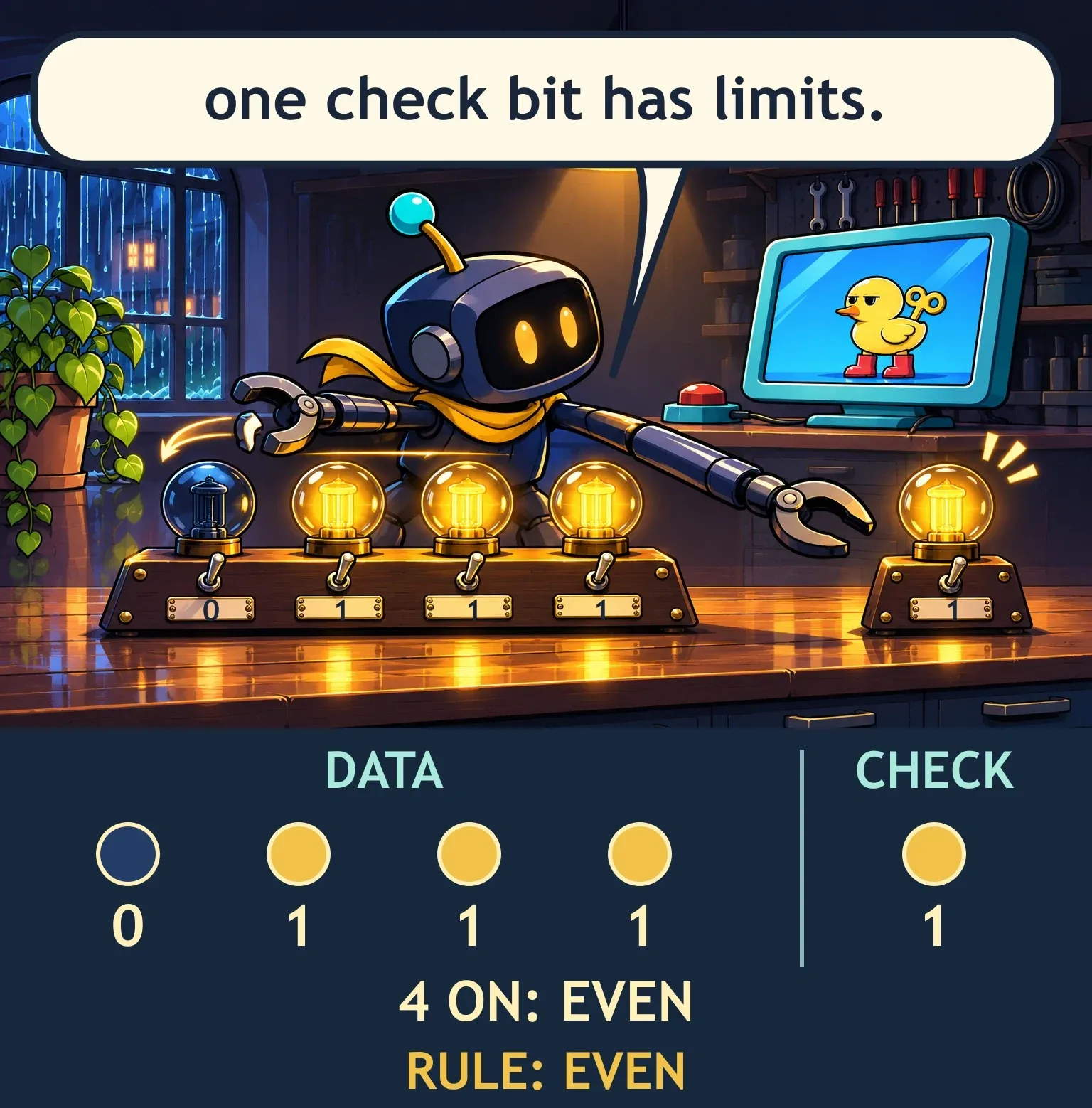
FRESH TEST: 1011 | 1. FLIP DATA POSITIONS 1 AND 2
0111 | 1 → TOTAL ONES 4 (EVEN)
Robot: There are four ones.
New data is 0111. It's different from the original 1011.
ORIGINAL DATA 1011 ≠ RECEIVED DATA 0111
EVEN TOTAL → PASS. DATA CHANGED
Robot: The data changed
What the check can tell us
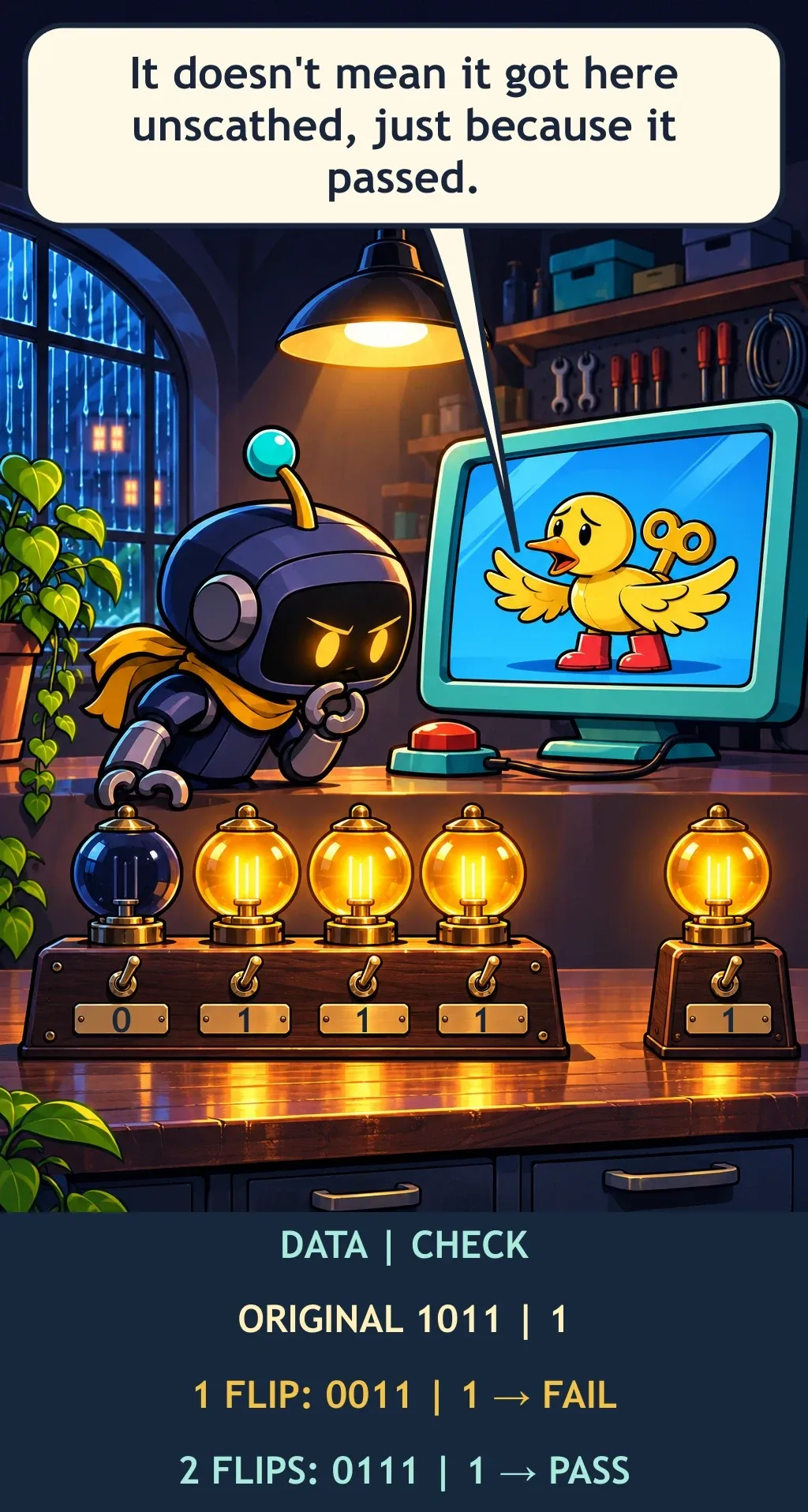
PASS ≠ PROOF OF UNCHANGED DATA
Duck: It doesn't mean it got here unscathed, just because it passed.
Robot: one check bit has limits.
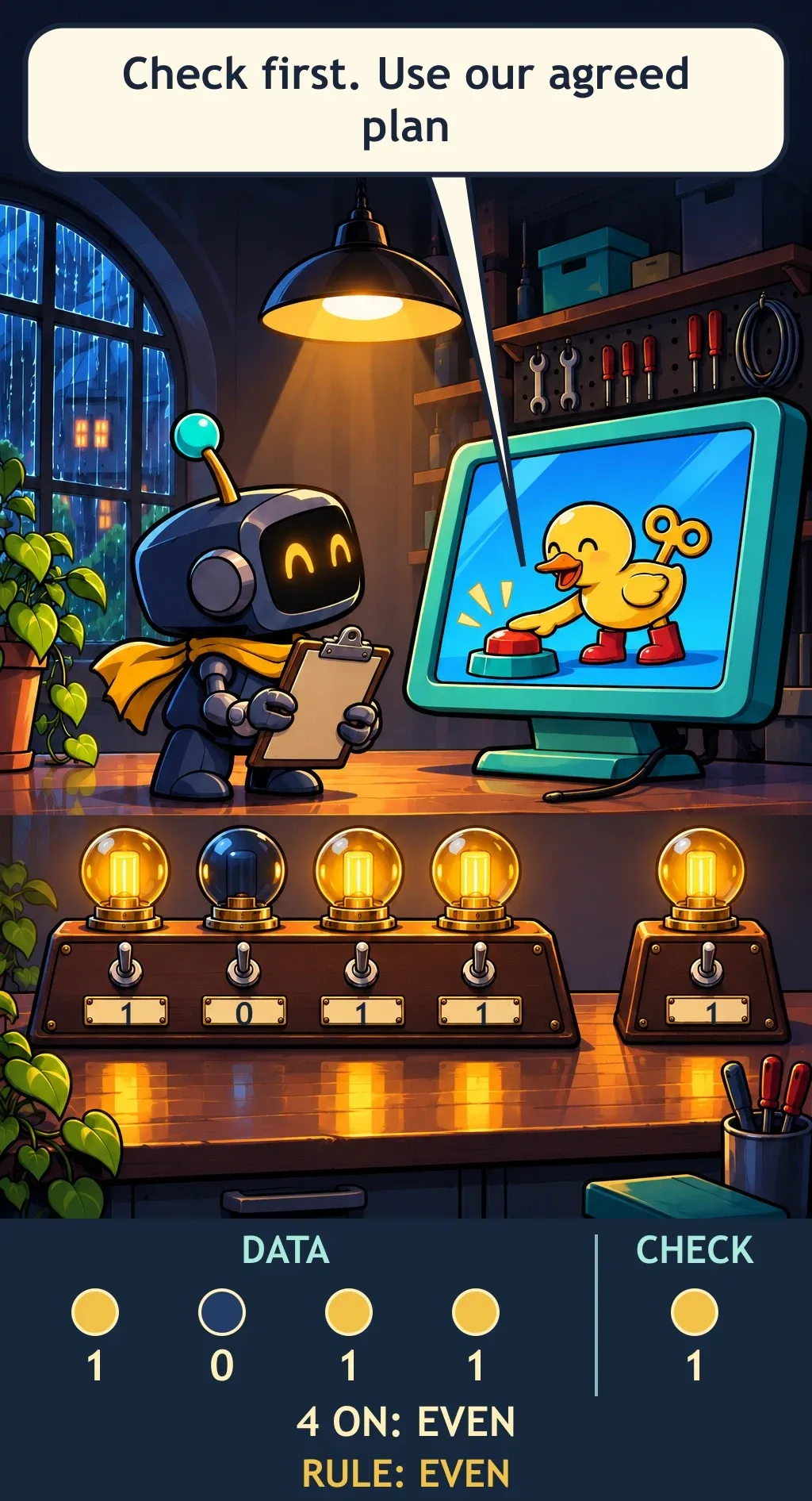
Robot checks it first.
Duck: Check first. Use our agreed plan
Even parity
EVEN PARITY: COUNT ALL ONES IN DATA + CHECK
The rule that's settled upon is that the total should be even.
So if you flipped an odd number of bits it will be a failing check. If you flipped an even number of bits then you still have an even total number of 1's in the data and check bits and the check will pass. But a passing check doesn't mean that the message wasn't altered. This doesn't tell you where the bad bit is, nor does it fix the bad bit. If you want a retransmit you'd have to have some established way to ask for that.
Try a changed check bit
START: DATA 1100 | CHECK 0. FLIP ONLY CHECK → 1100 | 1
Answer
1100 | 1 → 3 ONES → ODD → FAIL
Duck knows because it was a test he set up. Robot gets 1100 + check bit 1. It sees 3 1s across the 5 positions. 3 is odd, so it fails the even parity check. Robot can't tell what bit is different (and fix it) just from this check.