 HoldMyTwist
Episode 20
The Three-byte Star
Duck tries to get a sign in an envelope. Robot explains why a character isn't always exactly one UTF-8 byte.
Episode transcript
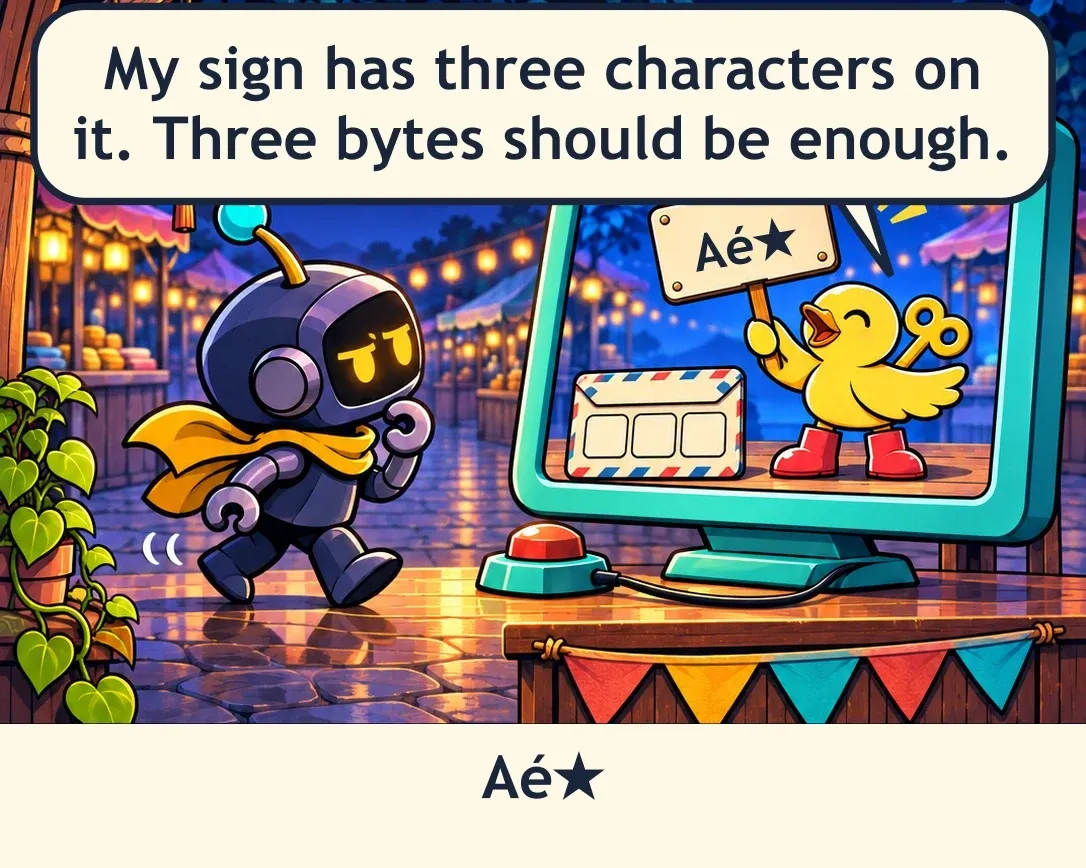
Three symbols
Duck tries to get a sign in an envelope.
Diagram values: Aé★; ENVELOPE: 3 BYTE SLOTS
Duck: My sign has three characters on it. Three bytes should be enough.
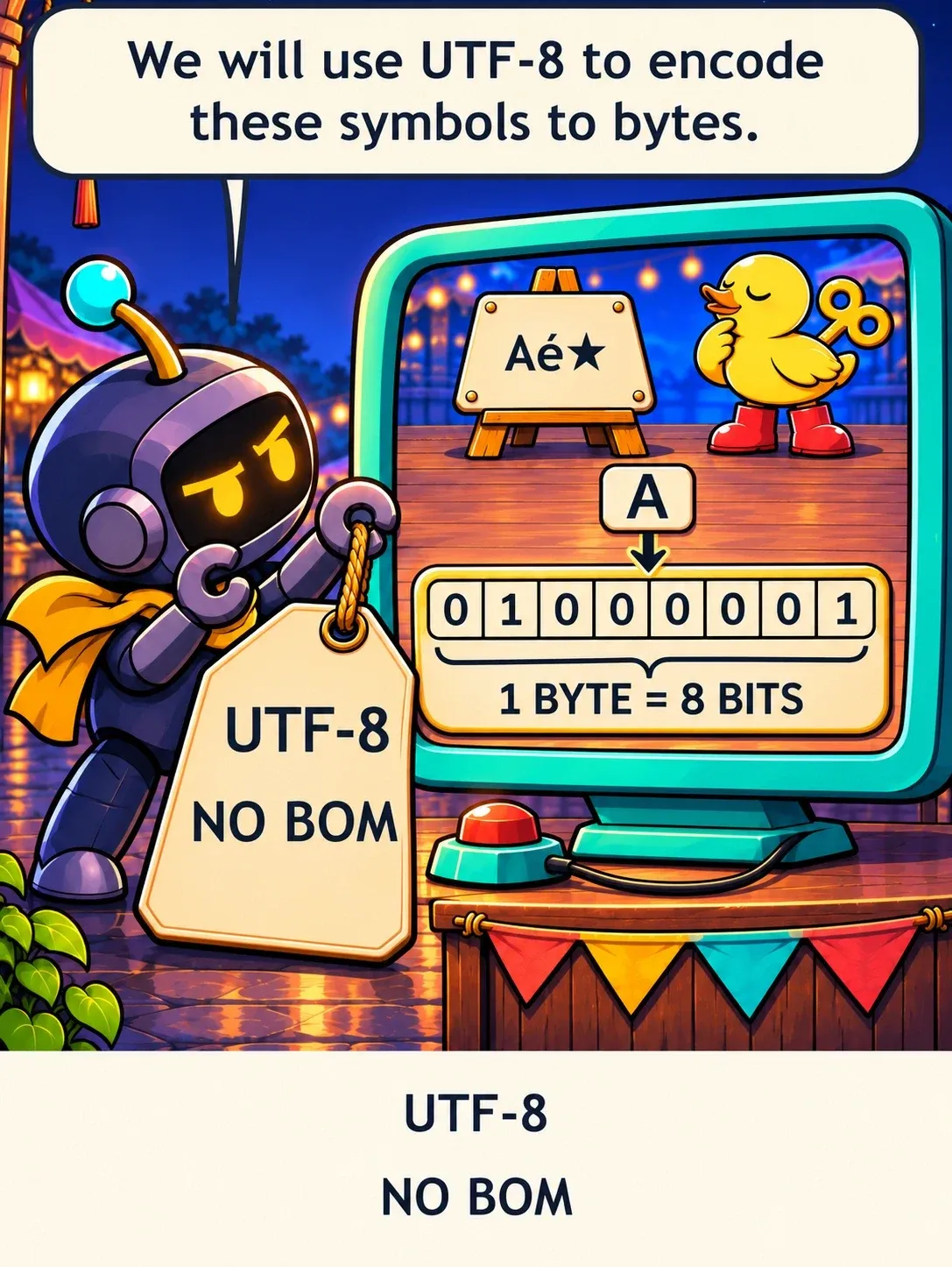
Robot displays selected utf8-rule. In monitor A shows one enclosing byte container which has 8 bit compartments (zero one zero zero zero zero zero one).
Diagram values: UTF-8; NO BOM; A: 01000001; 1 BYTE = 8 BITS
Robot: We will use UTF-8 to encode these symbols to bytes.
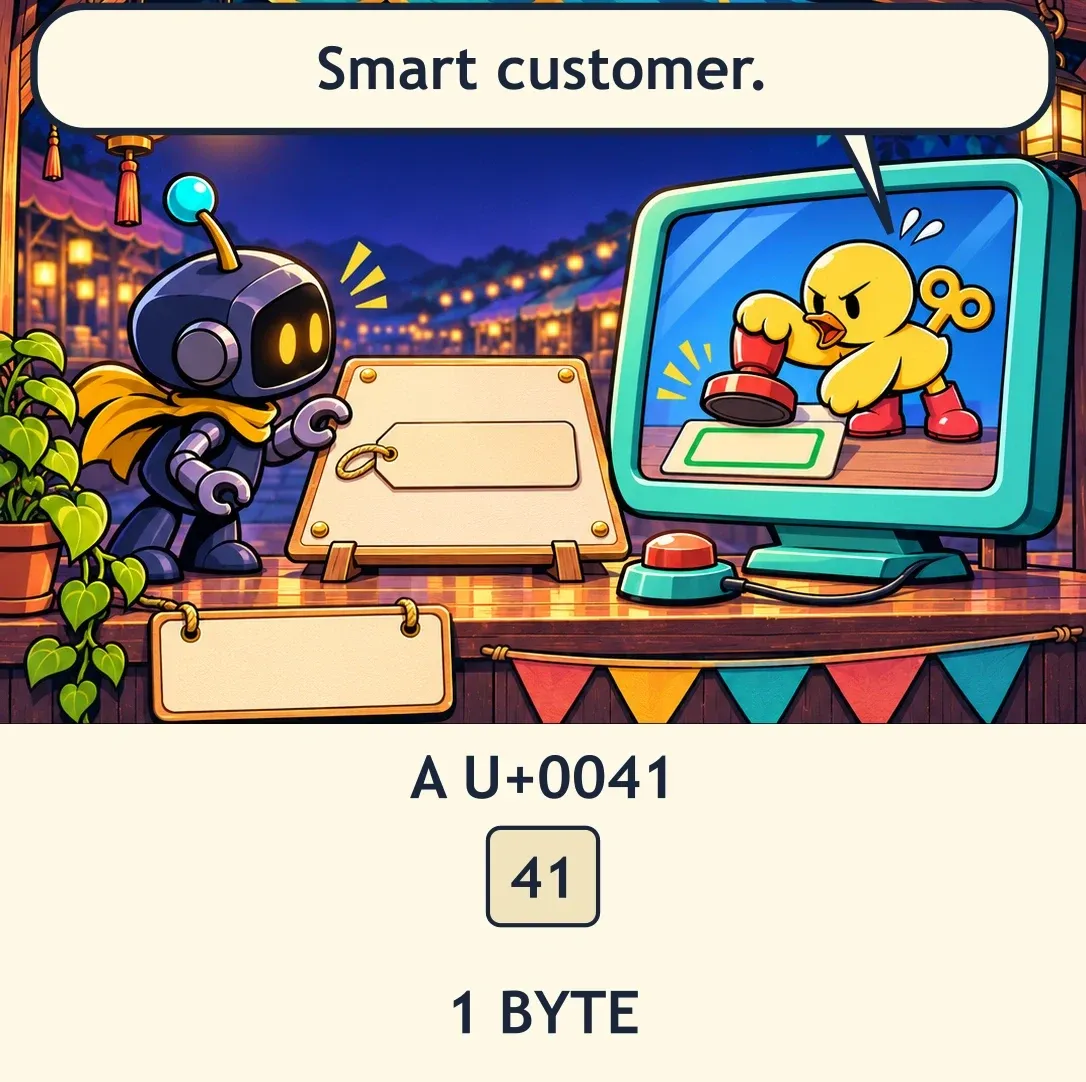
Duck approved the 1 byte slot.
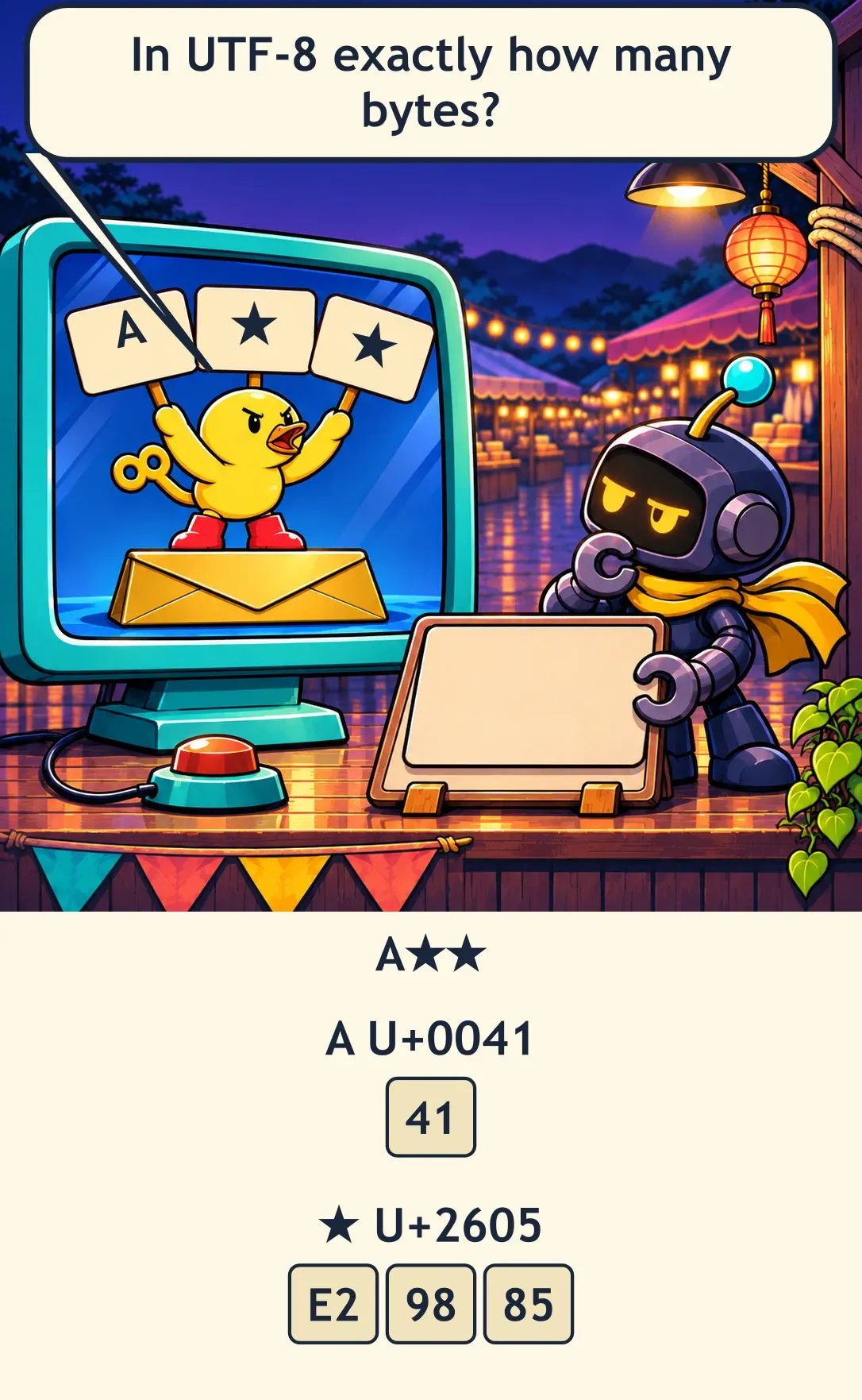
Diagram values: A U+0041; 41; 1 BYTE
Duck: Smart customer.
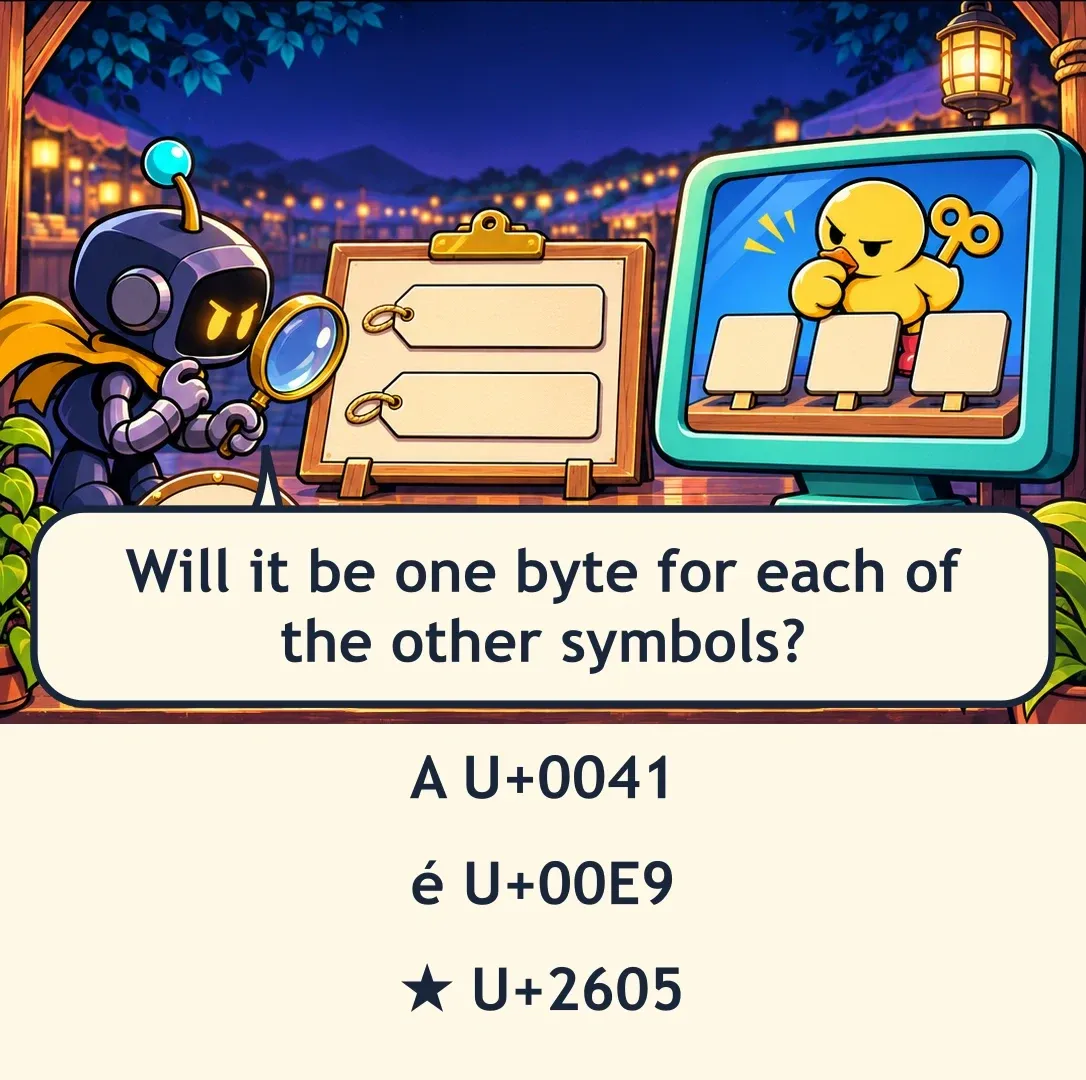
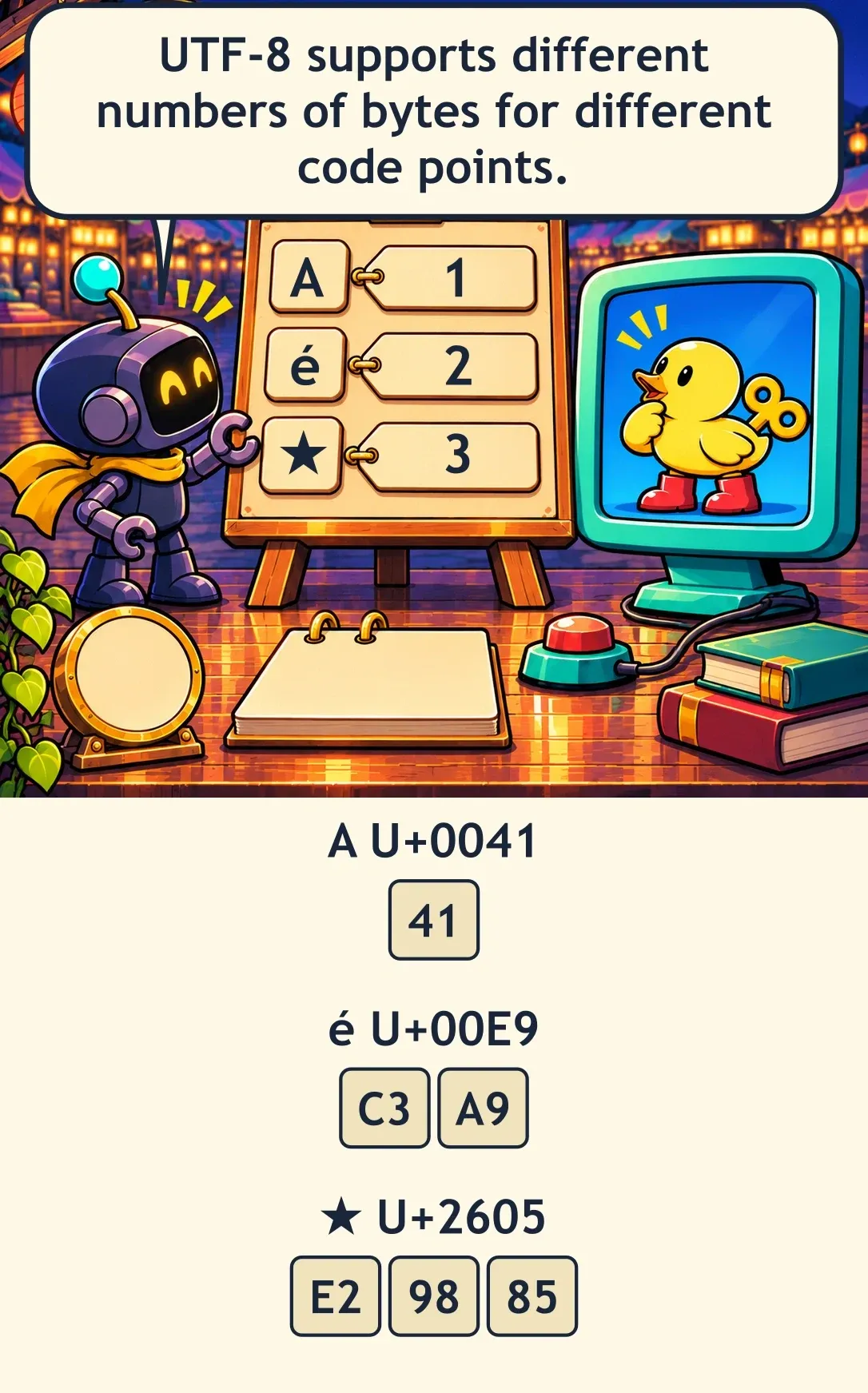
The specific code points we're talking about are A U+0041, precomposed é U+00E9, and ★ U+2605.
Diagram values: é U+00E9; ★ U+2605
Robot: Will it be one byte for each of the other symbols?
Pack the bytes
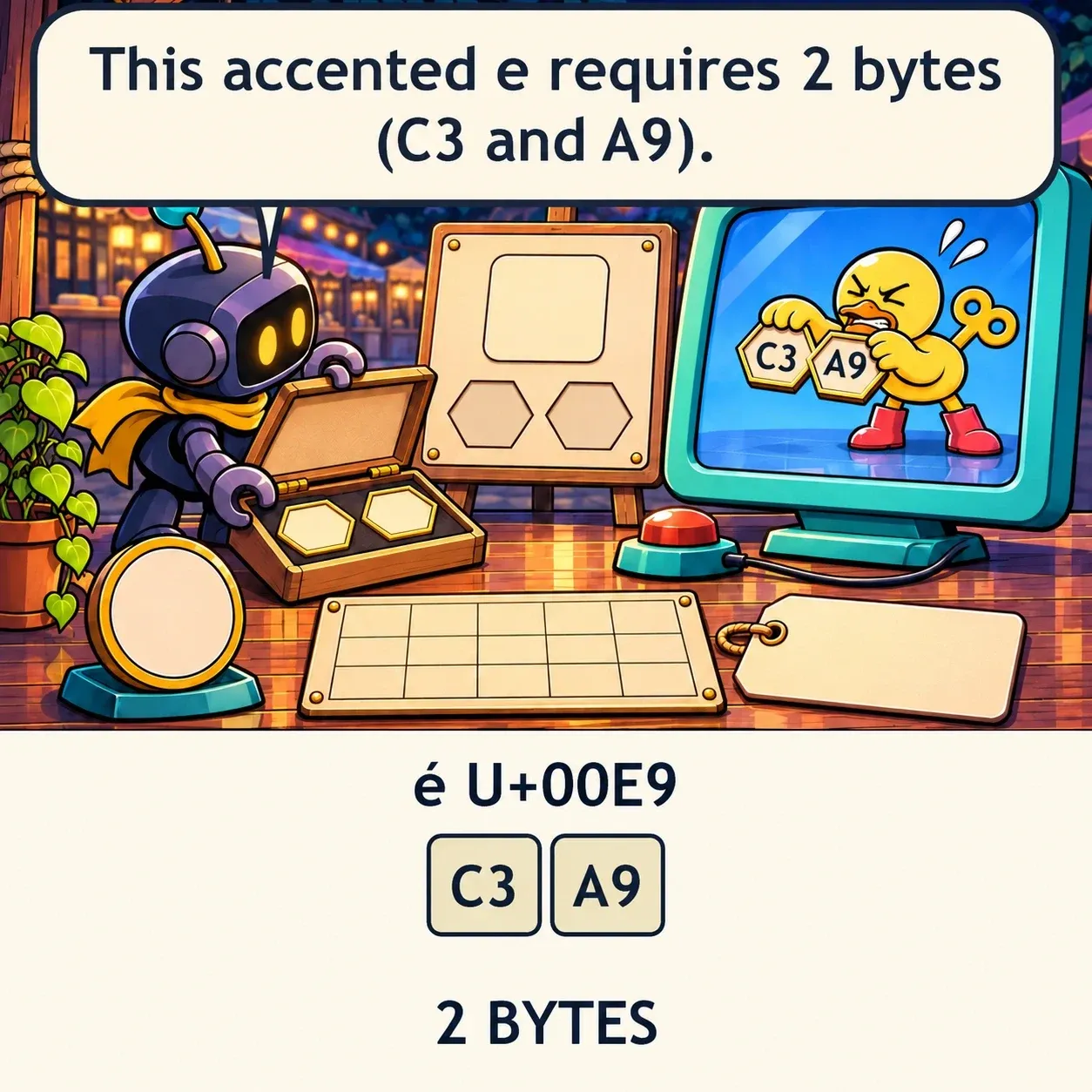
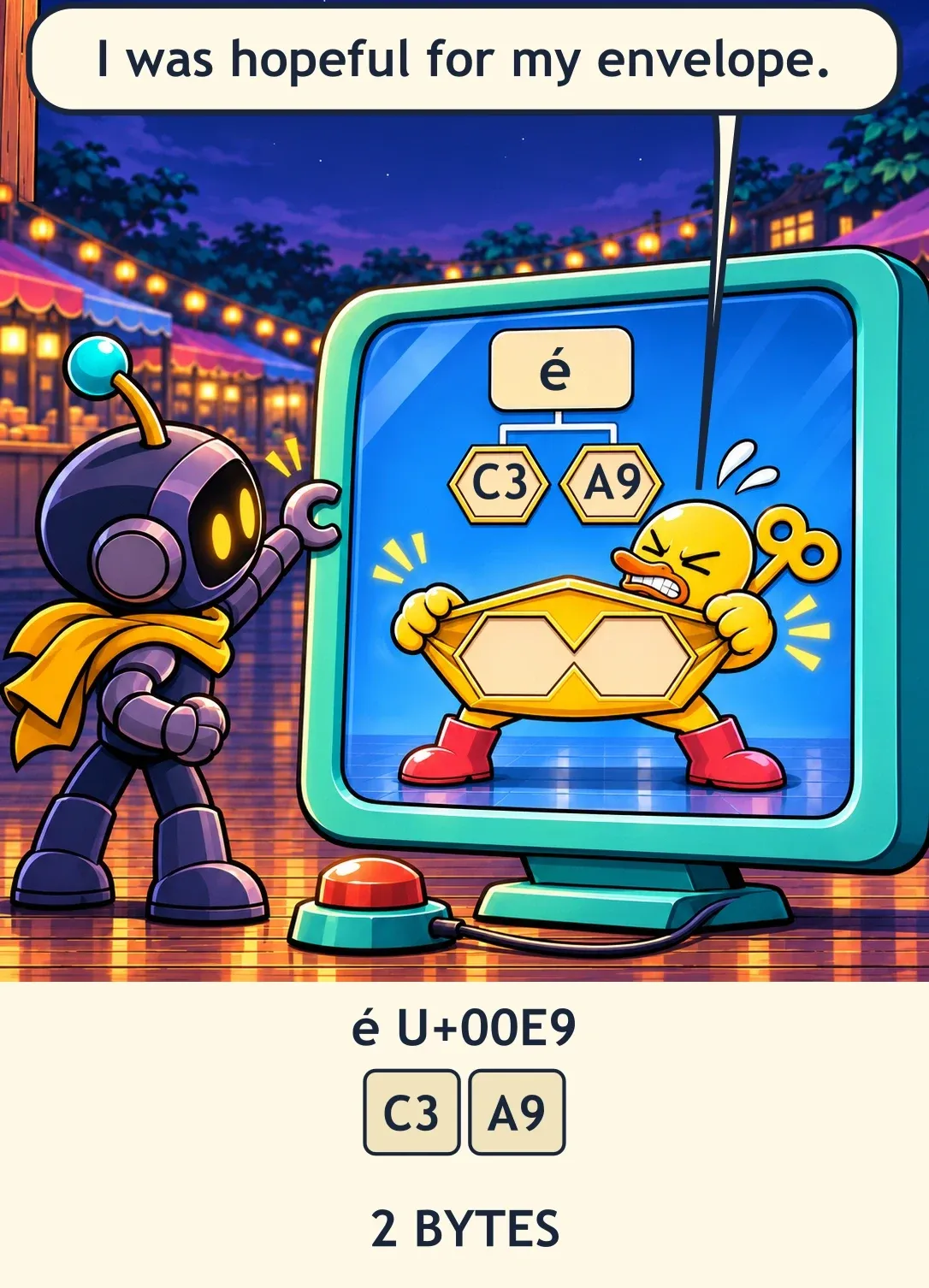
Robot finds 2 hex-byte slots C3 A9 under precomposed é U+00E9. Duck tries to squeeze them in to 1 slot but fails.
Diagram values: é U+00E9; C3 A9; 2 BYTES
Robot: This accented e requires 2 bytes (C3 and A9).
Robot points to the single character which is above two slots.
Duck: I was hopeful for my envelope.
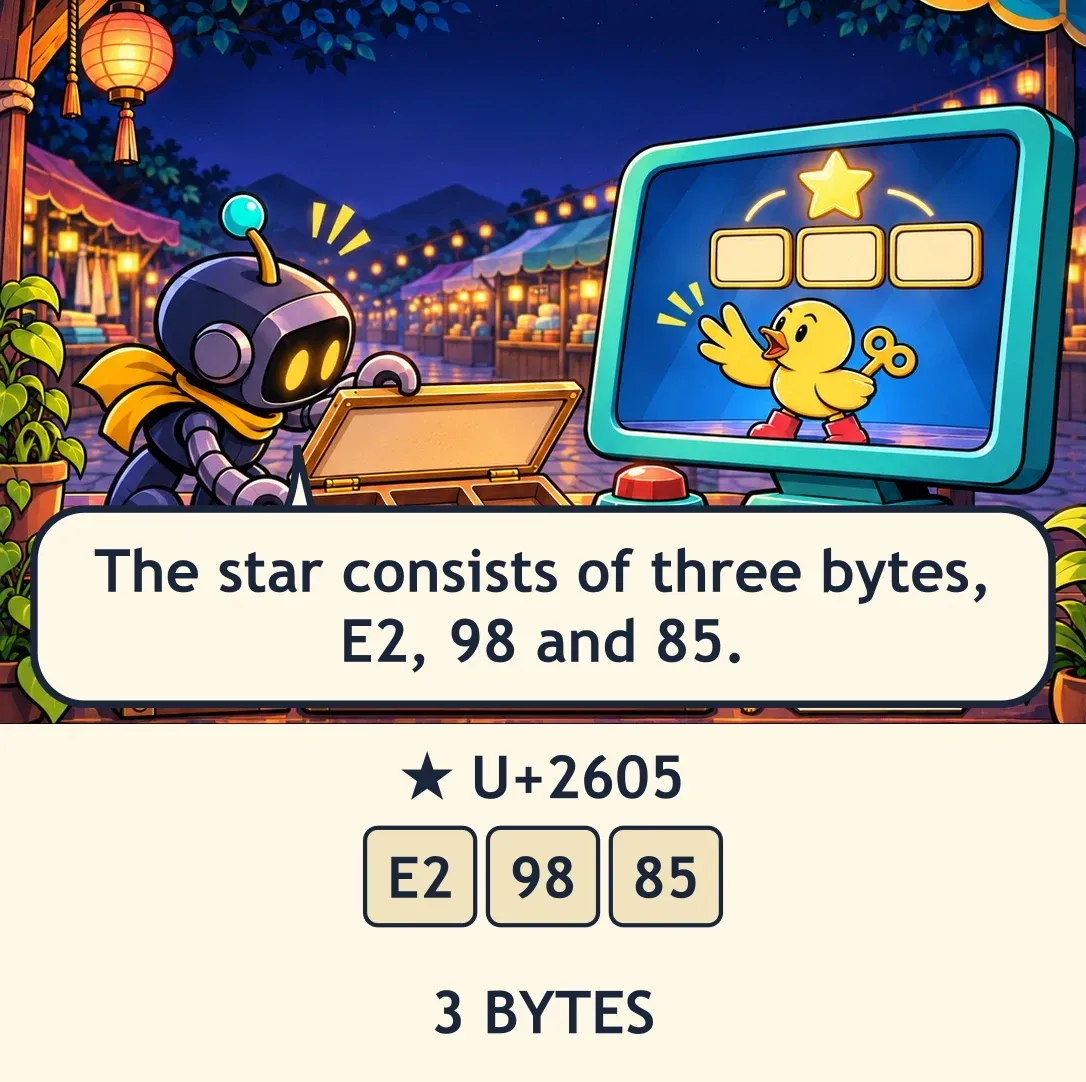
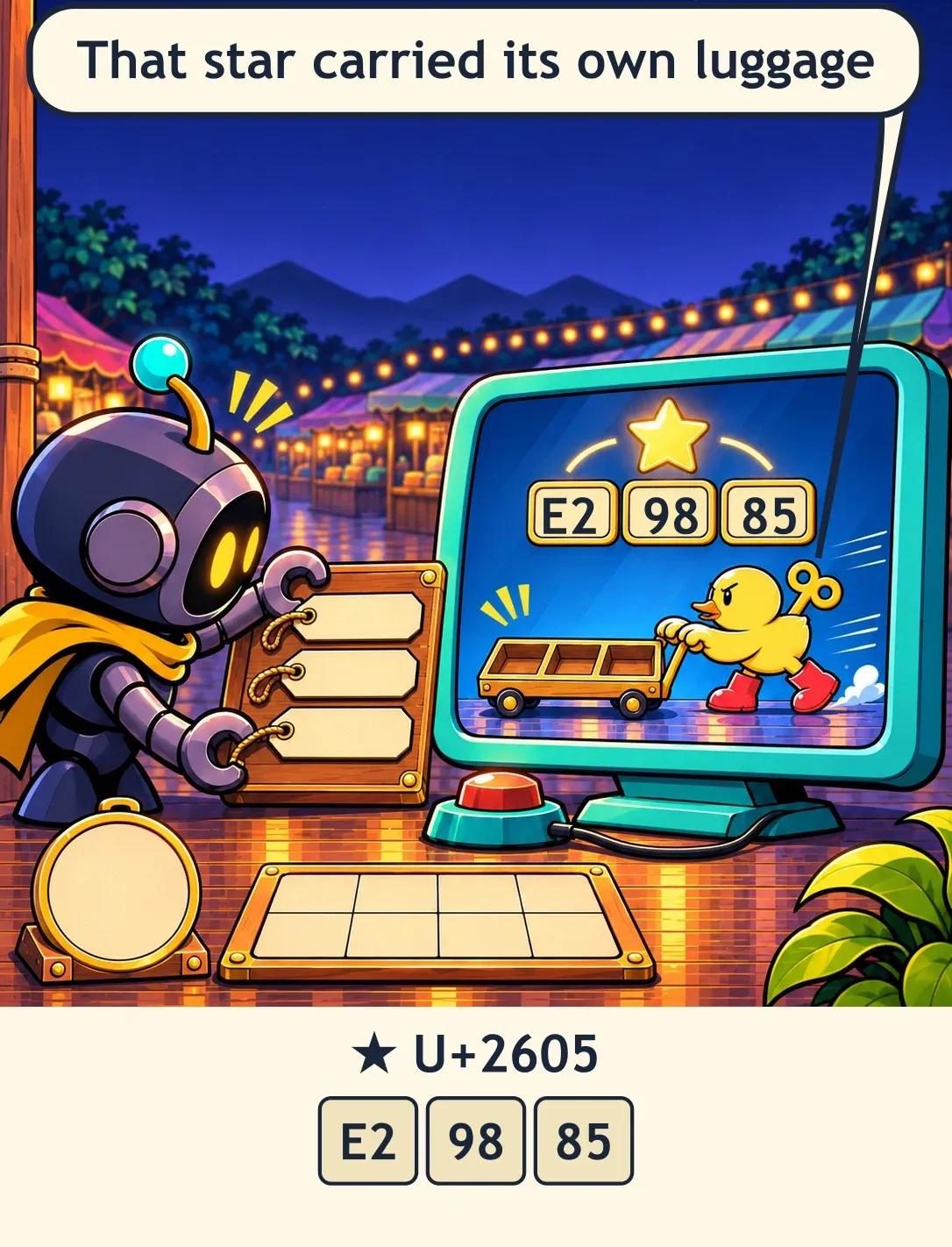
Robot finds three separate slots E2 98 85 below ★ U+2605.
Diagram values: ★ U+2605; E2 98 85; 3 BYTES
Robot: The star consists of three bytes, E2, 98 and 85.
Duck pushes a small three-box trolley under the star row in the monitor.
Duck: That star carried its own luggage
Robot puts A-row with 1 byte next to accented-e row with 2 bytes and star row with 3 bytes.
Diagram values: A:1; é:2; ★:3
Robot: UTF-8 supports different numbers of bytes for different code points.
Count a message
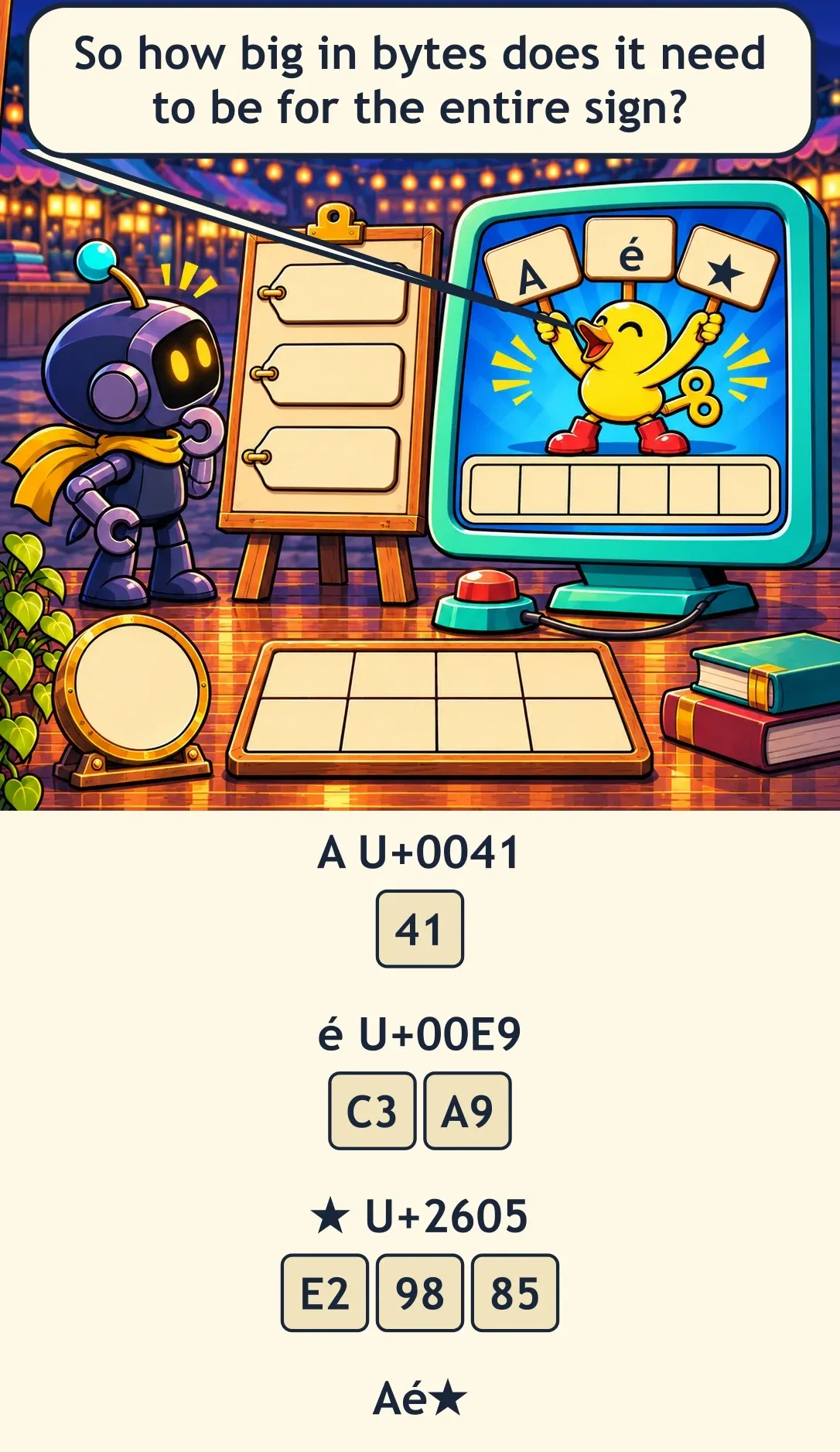
Duck holds Aé★ on empty 6-cell byte strip. Robot shows only three rows of components without total.
Diagram values: Aé★
Duck: So how big in bytes does it need to be for the entire sign?
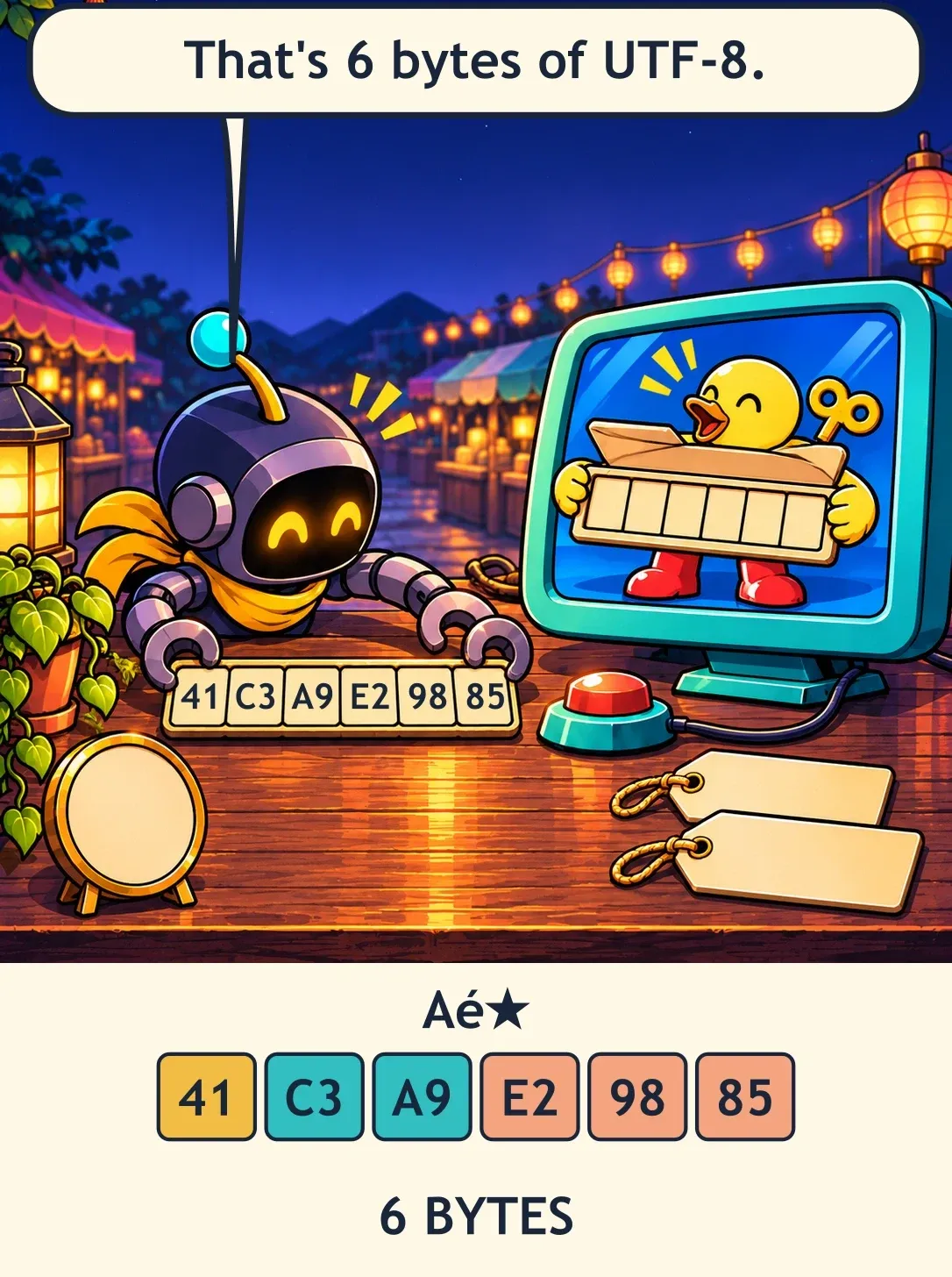
Duck inserts it into envelope, with six slots.
Diagram values: 41 C3 A9 E2 98 85; 6 BYTES
Robot: That's 6 bytes of UTF-8.
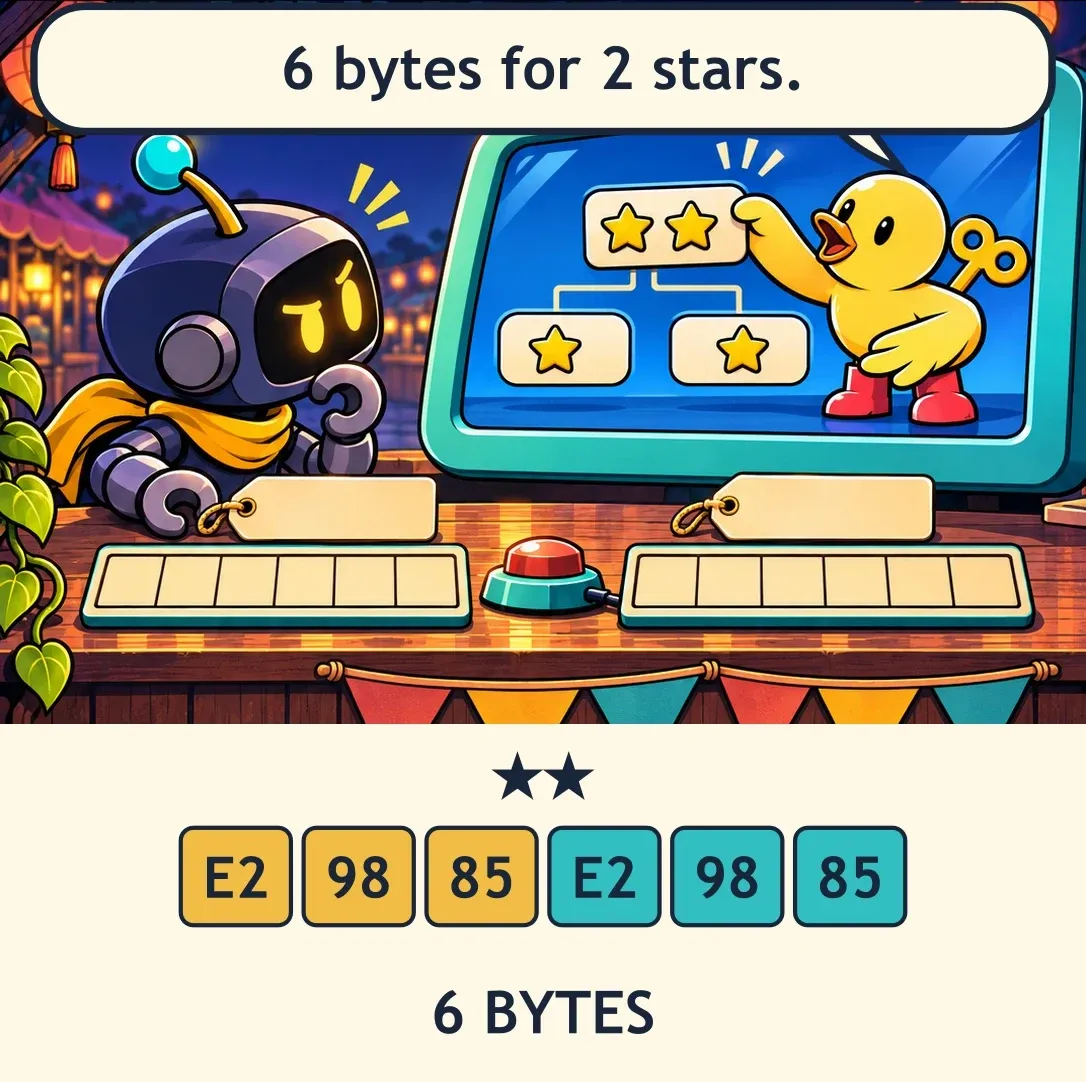
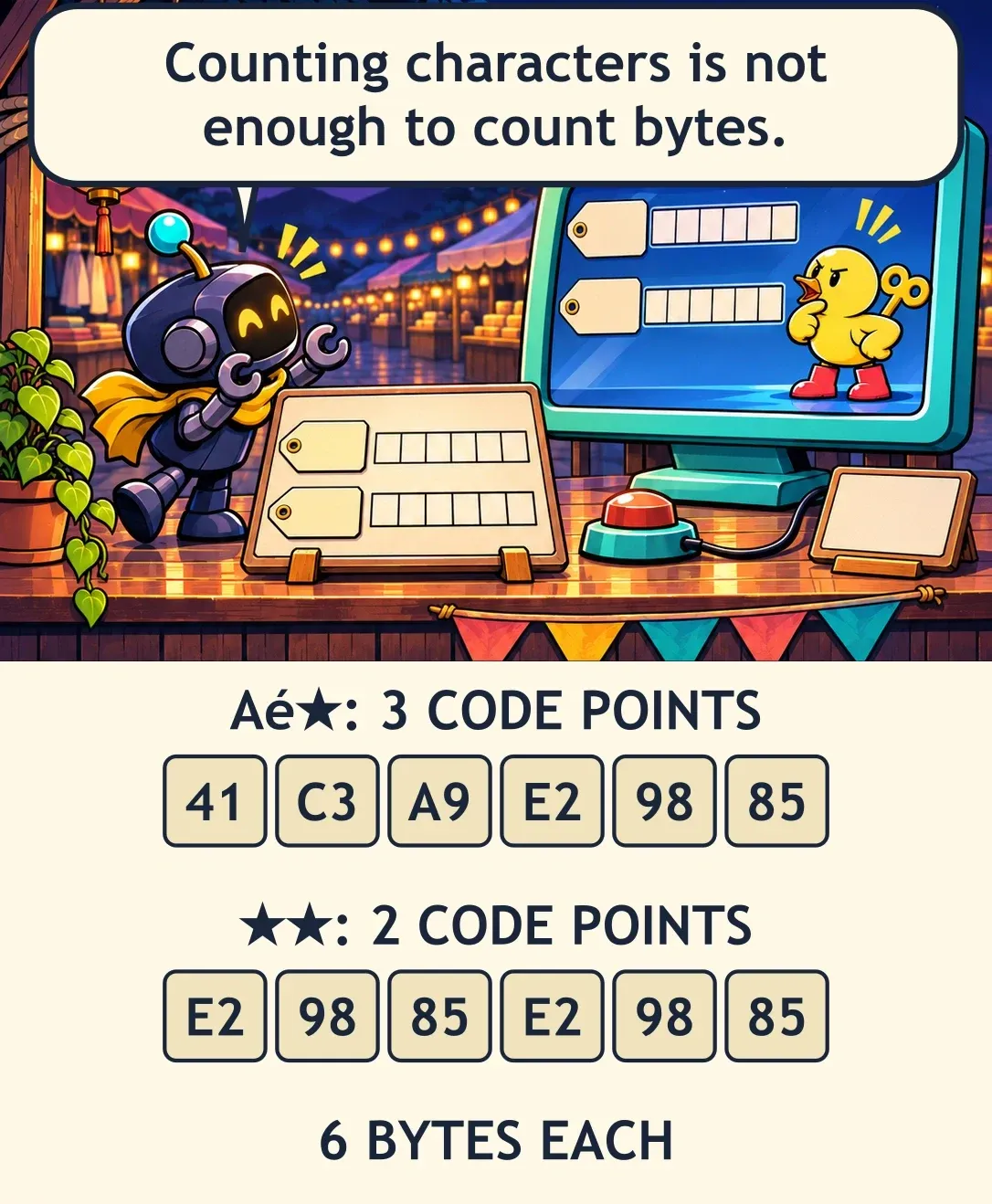
Robot compares 2 messages both UTF-8 encoded (no byte order mark).
Diagram values: ★★; E2 98 85 E2 98 85; 6 BYTES
Duck: 6 bytes for 2 stars.
Both messages are made of six byte cells.
Diagram values: Aé★:6 BYTES; ★★:6 BYTES
Robot: Counting characters is not enough to count bytes.
One extra letter
Duck sets up new message one A and two stars above known encoding rows. Robot conceals new total.
Diagram values: A★★
Duck: In UTF-8 exactly how many bytes?
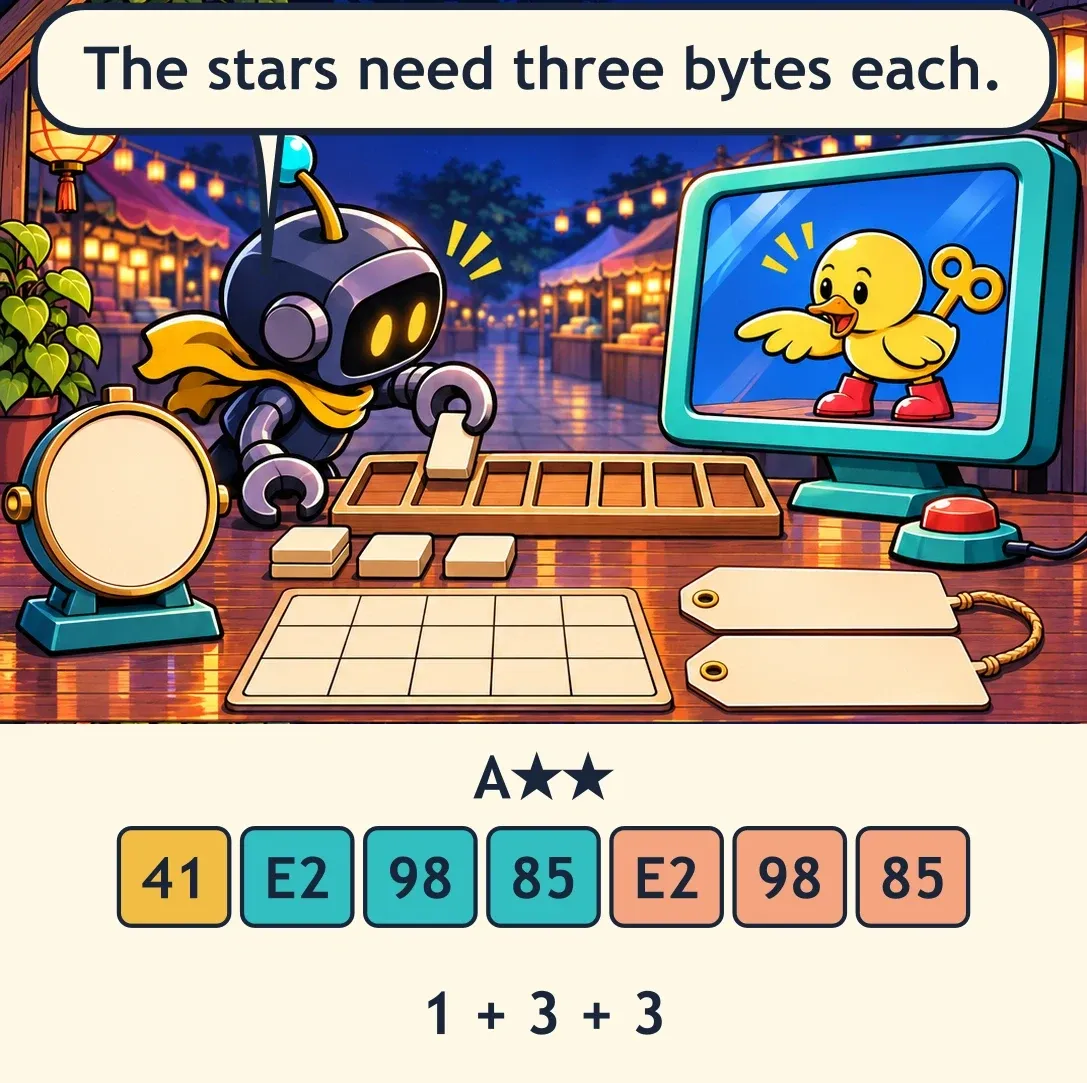
Duck does the group counting.
Diagram values: 1 + 3 + 3
Robot: The stars need three bytes each.
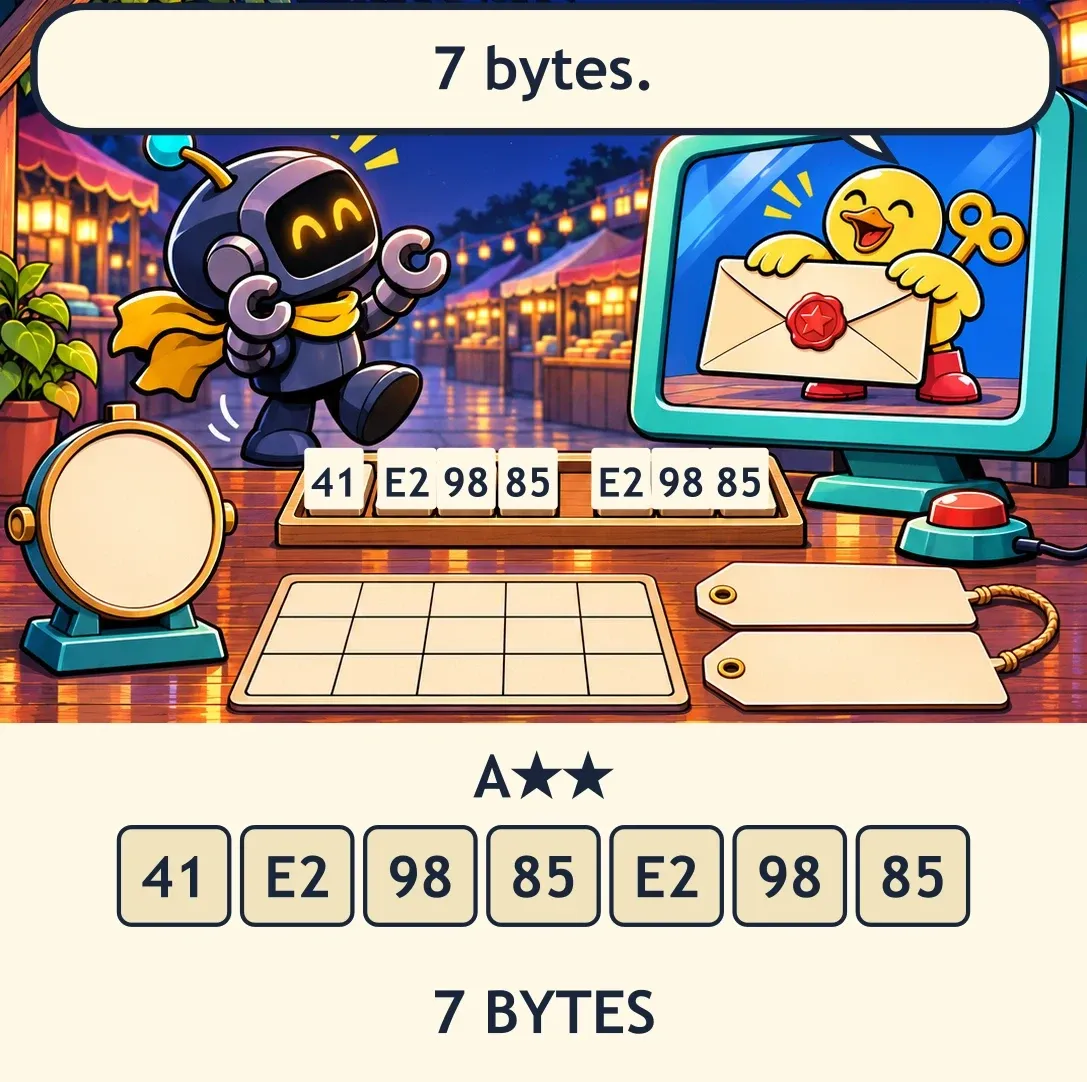
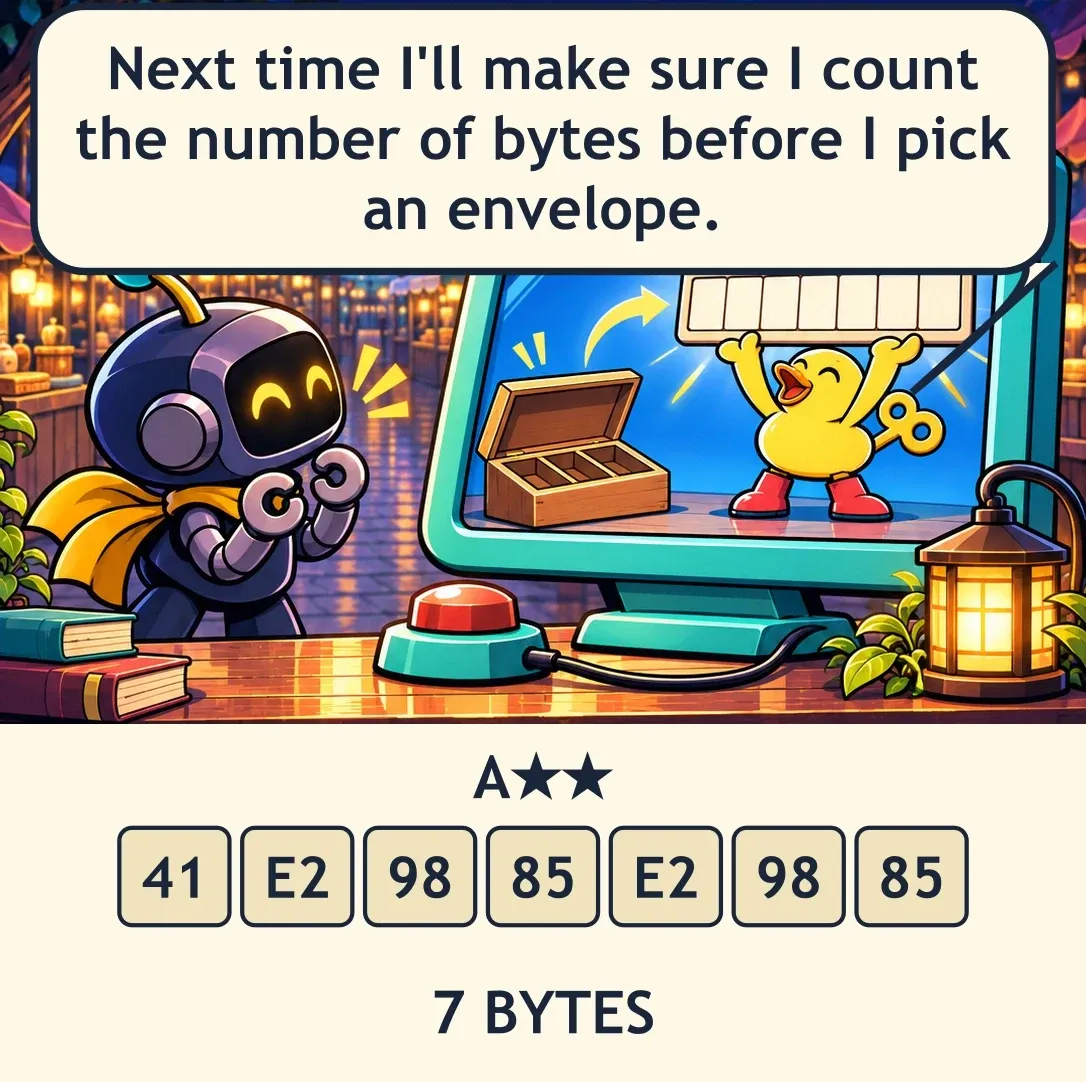
Duck stuffs the 7-bytes into the envelope and closes it.
Diagram values: 41 E2 98 85 E2 98 85; 7 BYTES
Duck: 7 bytes.
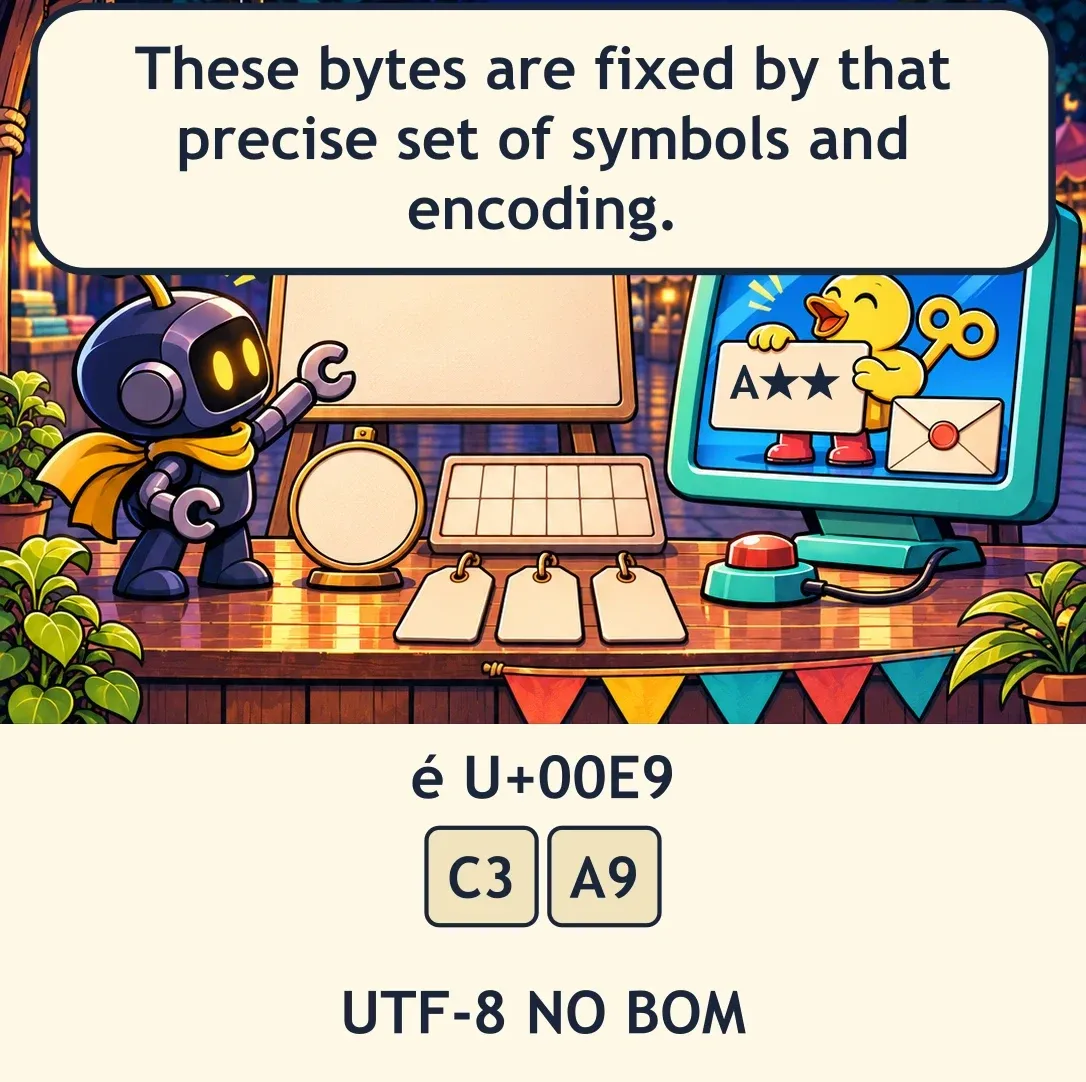
Duck preserves the final sign with correct envelope.
Diagram values: é U+00E9; UTF-8 NO BOM
Robot: These bytes are fixed by that precise set of symbols and encoding.
Duck puts the old three slot envelope away. He's holding the new seven slot envelope.
Duck: Next time I'll make sure I count the number of bytes before I pick an envelope.
The lesson
UTF-8 is a variable-length encoding of Unicode code points. The specific code points we're talking about are A U+0041, precomposed é U+00E9, and ★ U+2605. The specific UTF-8 byte values in hexadecimal for these are 41, C3 A9 and E2 98 85 respectively. When byte order mark is absent, the UTF-8 for Aé★ is 6 bytes long, just like the UTF-8 for ★★. Note that we're making a distinction here between code points (the abstract thing) and the bytes (the representation in memory). Sometimes characters that can be seen by the reader can be represented by more than one code point, so that is not necessarily a reliable way to count visible characters.
Try it
Diagram values: UTF-8, NO BOM; ééA; é = U+00E9
What is the size of string encoding ééA in UTF-8 (no BOM) format? Both accented e's are the same precomposed U+00E9 character from the story. In UTF-8 exactly how many bytes?
Answer
Diagram values: 2 + 2 + 1 = 5 BYTES; C3 A9 C3 A9 41
Each precomposed accent e costs 2 bytes. A costs 1 byte. 2+2+1 = 5 bytes. hex C3 A9 C3 A9 41